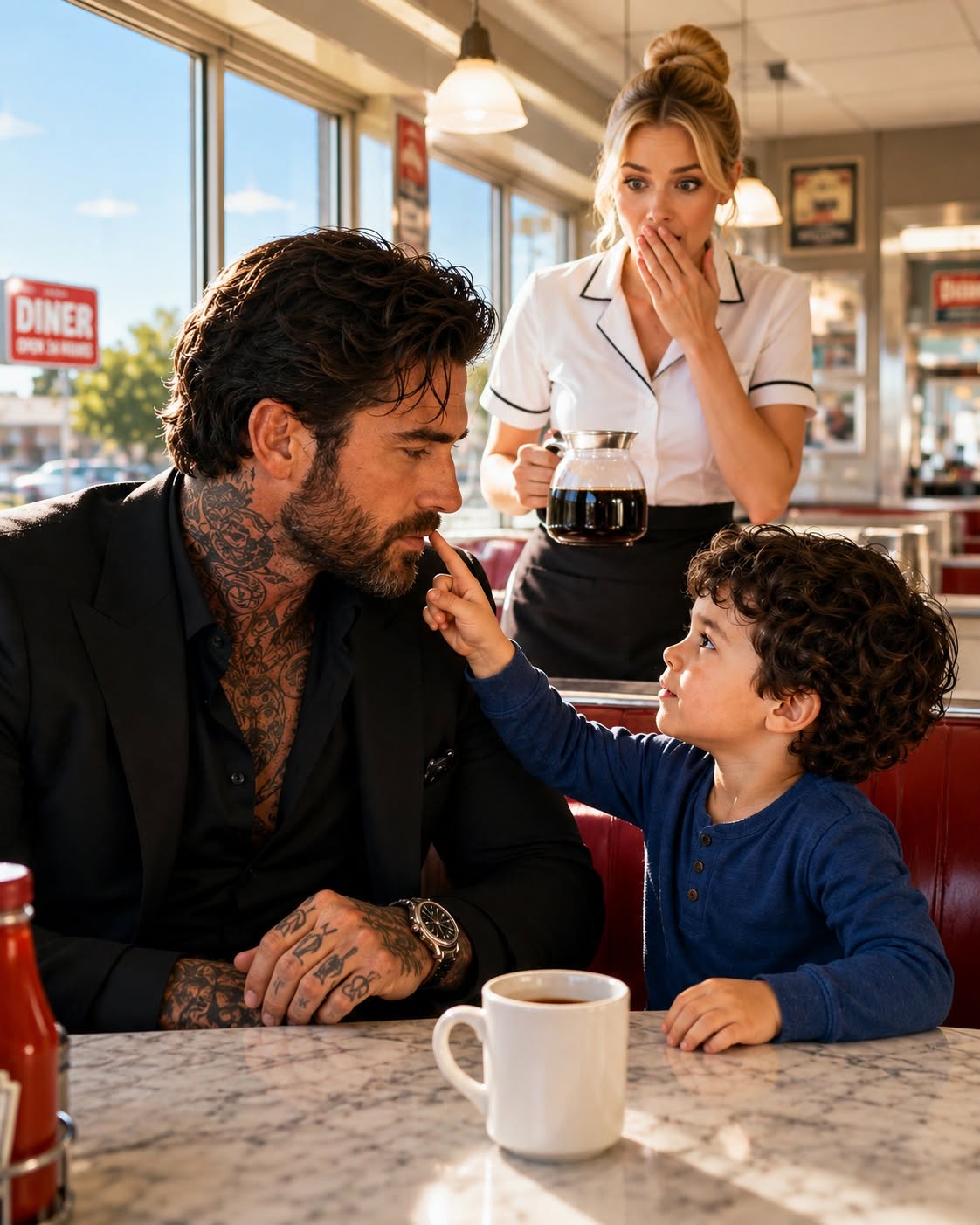
The mafia boss believed he could never have a child — until my five-year-old son looked up from a diner booth and asked him, “Sir, why are your eyes wearing my face?” The entire restaurant went silent. And when Matteo Vieri finally turned those same gray eyes toward me, the secret I had buried for six years came back to destroy the quiet life I had built. (more…)
Blog
-
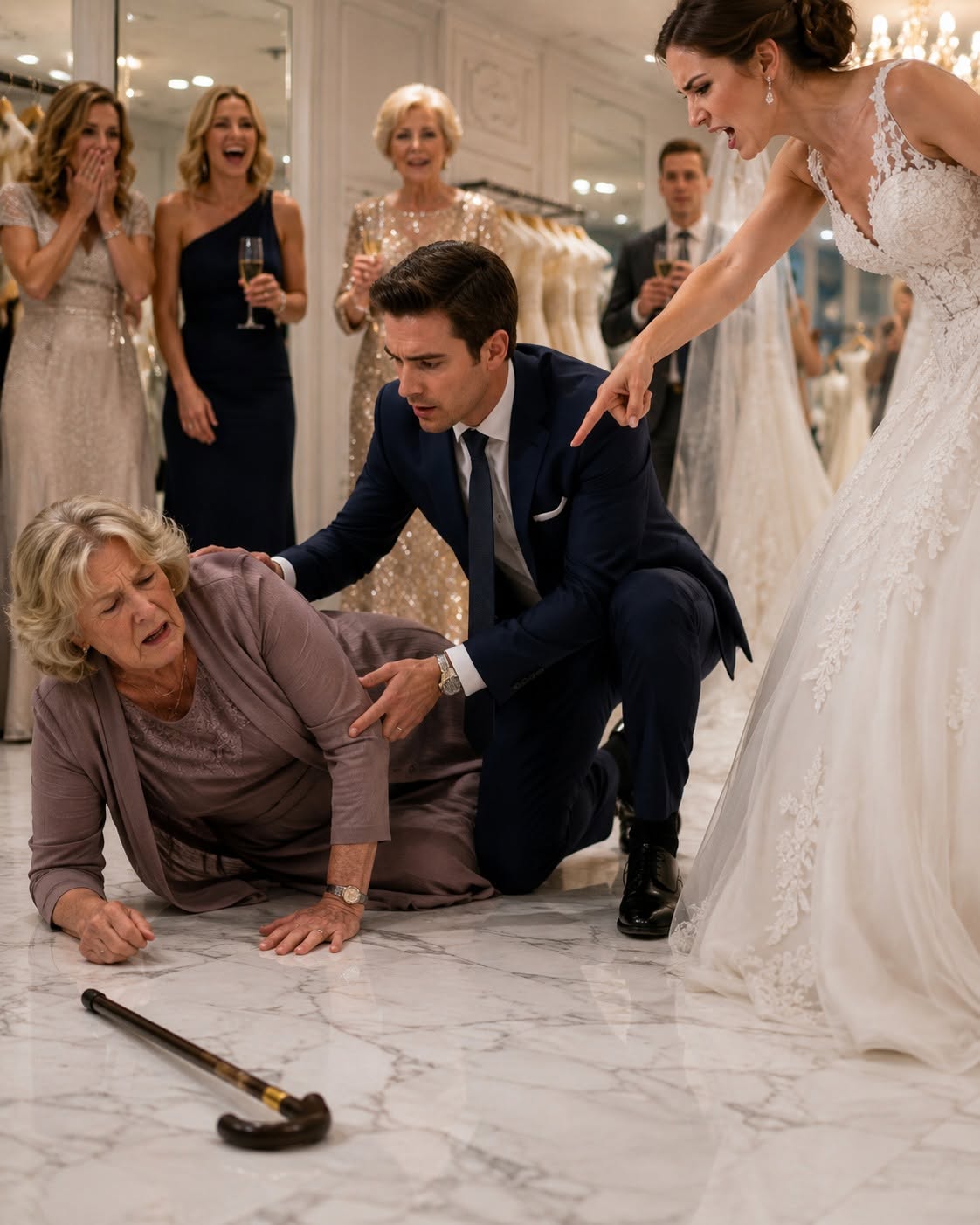
“You’re Here to Serve Me” — What My Bride Said After Shoving My 74-Year-Old Mother
At my fiancée’s dress fitting, I watched her shove my elderly mother to the floor and snap, “Get up and hold my gown — you’re here to serve me.” My mother’s cane rolled across the room as everyone laughed. I helped her stand, then quietly smiled. On our wedding day, my bride reached the altar to find no groom, no guests, and a giant screen exposing her cruelty — while security escorted her from the venue I had already canceled. (more…)
-
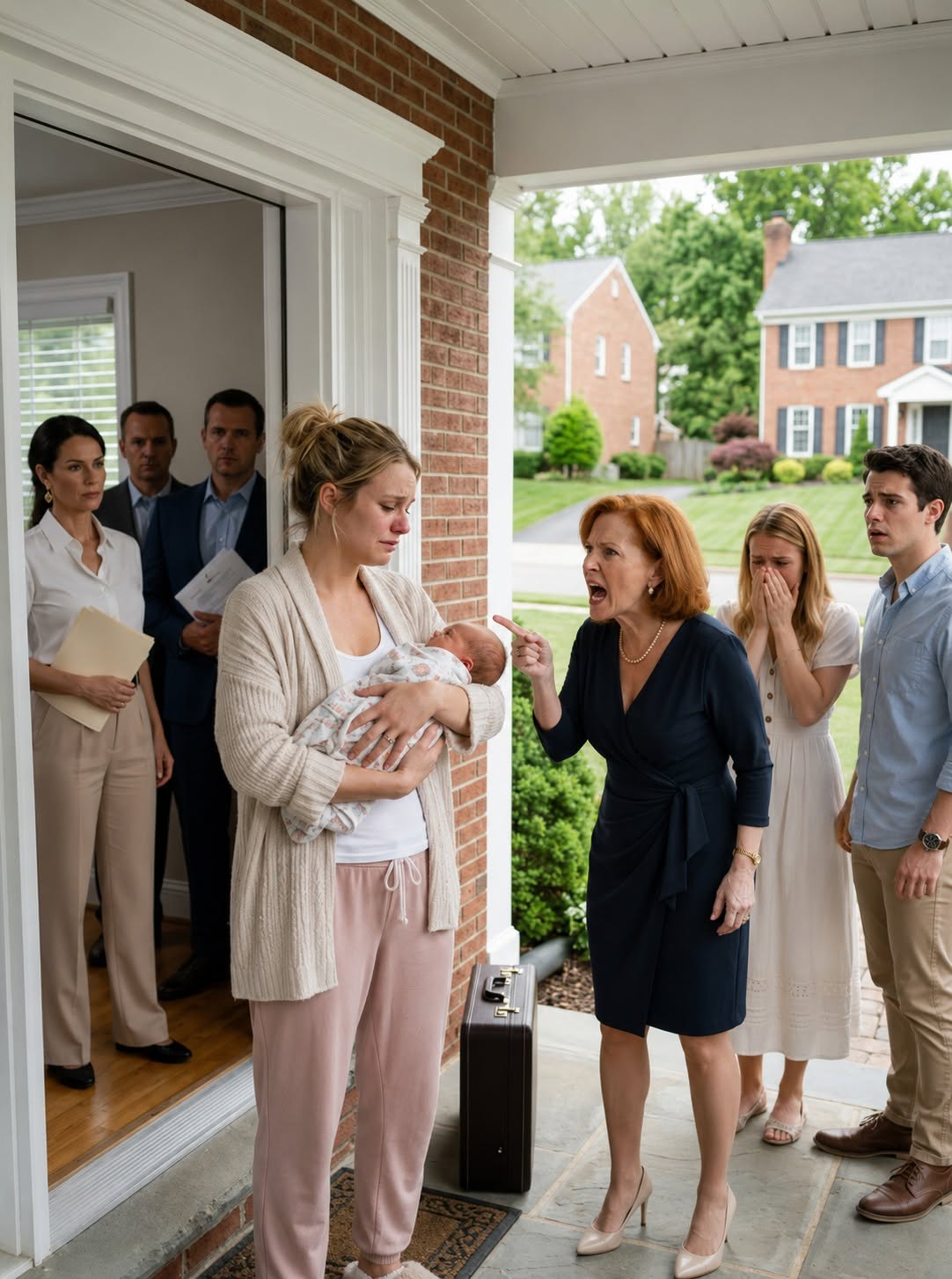
She Thought the House Was Already Hers to Take — Until the Police Showed Up
I bought a small blue house so my newborn daughter and I could finally be safe after my husband died, but my mother arrived with suitcases, relatives, and a stolen key, ready to push me into the living room and claim my home as family property — without knowing my brother-in-law was waiting behind the chained door with police, legal documents, and proof that this house belonged only to Emilia and me.
The very first evening that Lucía Reyes spent in the home she had bought for herself and her newborn daughter ended with an unexpected knock. Standing outside was her mother, carrying several suitcases and fully intending to take over the house — and force Lucía out. (more…)
-
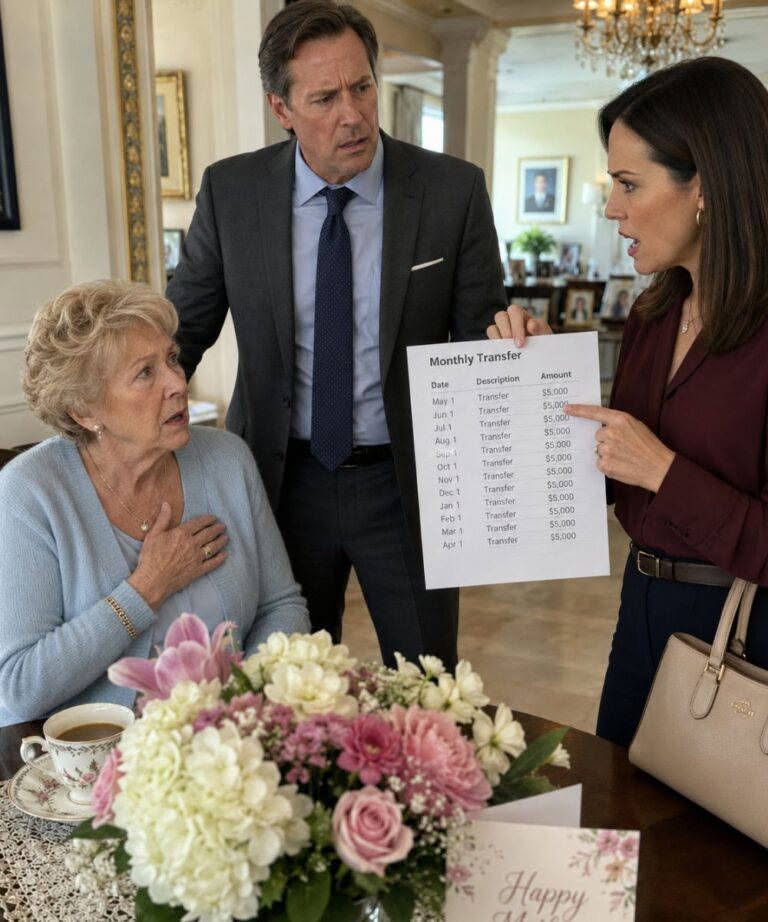
“Dad, Don’t Make Such a Big Deal Out of It” — My Son Said, the Day His Mother Died
I called my son from our kitchen in Detroit to tell him his mother had died.
He let out a tired sigh and said, “Dad, please don’t turn this into something bigger than it has to be. I’m leaving for Europe with my wife. The tickets can’t be refunded.”
So I buried Diane in a small chapel with only five people sitting in the pews.
Ten days later, his wife walked into my living room carrying a designer handbag, completely unaware of what Diane had left behind.
The phone rang twice before Darnell answered. His voice was distant and annoyed, like I had interrupted something far more important than the death of his own mother. In the background, I could hear music, laughter, and glasses touching together. Maybe he was at a restaurant. Maybe some rooftop place in Chicago where people take pictures under city lights and call it happiness.
I stood alone in our kitchen in Detroit, one hand braced against the counter. Diane had been gone less than a day. Her coffee mug still sat beside the sink, the one with the faded blue rim and the tiny crack near the handle. Her reading glasses were still near the window. Her chair was still pulled slightly away from the table, as if she had only stepped into the next room.
But she had not.
-

One Dollar and Good Luck
I spent weeks in the hospital fighting for my life, and my family never came once. Not my mother, not my father, not my sister. One month later, my mom texted asking for $12,000 for my sister’s bridal dress. I sent her one dollar and wrote, “Good luck.” Hours later, everything exploded.
I spent three weeks in St. Vincent Medical Center in Portland, Oregon, listening to machines measure whether I was still worth keeping alive. Sepsis, the doctor said. A blood infection that had started from a ruptured appendix I had ignored because I was working double shifts at a logistics office and telling myself stomach pain was just stress.
By the time my coworker, Marcus, found me collapsed beside the copy machine, my fever was 104, my blood pressure was crashing, and my body had begun negotiating with death.
In those three weeks, I had time to count ceiling tiles. I had time to learn the names of nurses who changed my IV bags. I had time to watch my phone light up with spam emails, pharmacy reminders, and one birthday coupon from a sandwich shop.
I did not have time to pretend anymore.
My mother, Diana, never came. My father, Robert, never came. My sister, Chloe, never came. I knew they knew. Marcus called them from the ER. I saw the call log later. My mother had answered and said, “We’re in the middle of something right now, but keep us updated.”
The “something” was Chloe’s wedding planning. Chloe, twenty-eight, the golden daughter, the pretty one, the one who cried at restaurants until someone else paid. My parents had spent my childhood treating her wants like emergencies and my emergencies like inconveniences.
When I was discharged, I went home alone to my small apartment, moving like an old woman at thirty-two. I had a scar across my abdomen, unpaid medical bills, and a refrigerator full of expired yogurt.
A month later, my mother texted me.
“We need $12,000 for your sister’s bridal dress. The designer needs payment by Friday. Family supports family.”
I stared at the message for so long the screen dimmed. Not “How are you healing?” Not “I’m sorry we didn’t come.” Not even “Are you alive?”
Just twelve thousand dollars.
I opened my banking app. My hands were steady. I sent her one dollar. Then I texted back:
“Good luck.”
A few hours later, my phone exploded. My mother called seventeen times. My father left a voicemail calling me selfish, bitter, and dramatic. Chloe sent a crying voice message saying I was “ruining the most important season of her life.”
Then, at 9:14 p.m., my mother sent one final text.
“You’ll regret humiliating this family. We’re coming tomorrow.”
I read it twice. Then I looked at the folder on my kitchen table. Hospital records. Screenshots. Bank transfers. Old messages. Proof of every dollar I had given them over the past seven years.
And for the first time since I woke up in that hospital bed, I smiled. (more…)
-
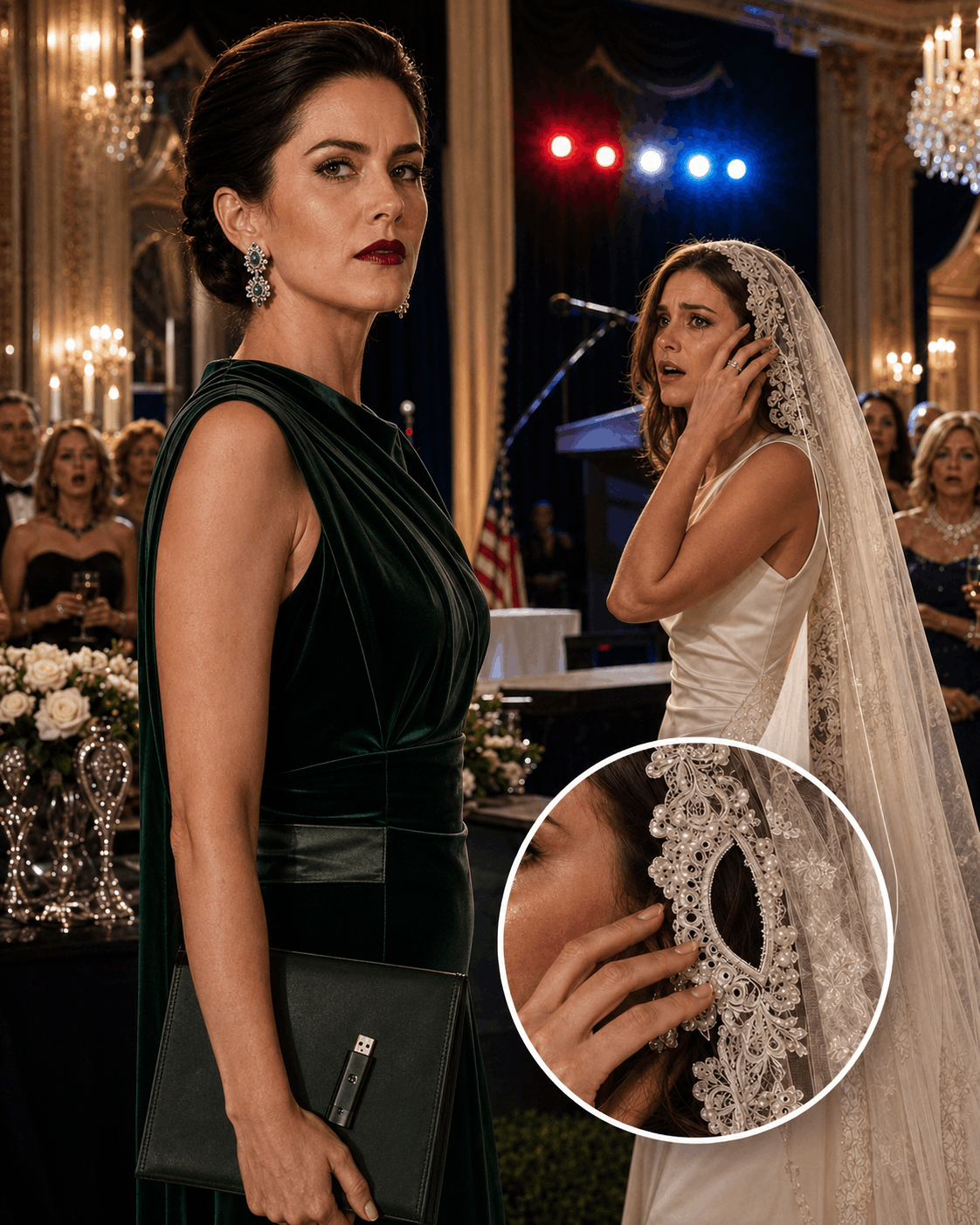
My husband’s mistress walked onto his victory stage wearing my wedding veil.
My husband’s mistress walked onto his victory stage wearing my wedding veil. Not a copy. Mine. He thought I would cry in the front row while the donors clapped and the cameras ate me alive, but what he did not know was that I had spent six months collecting every receipt, lease, wire transfer, and campaign record he thought I was too elegant to understand.
The ballroom at the Whitmore Grand Hotel looked like a rich man’s version of patriotism. Red, white, and blue lights rolled across crystal chandeliers, champagne towers, white roses, and smiling donors. My husband, Preston Whitaker, had just won his Senate race, and everyone in that room wanted to stand close enough to the new power to feel important.
I sat in the front row in a black velvet gown, calm enough to make people nervous.
Then Lila Monroe stepped onto the stage beside him. She was his campaign stylist, his public secret, and apparently the woman he believed could replace me before the victory speech was even finished. She wore a white satin gown and my mother’s wedding veil pinned into her hair like she had earned it. That veil had been kept in a cedar chest, wrapped in tissue and lavender, with my mother’s handwritten note still folded beside it.
Preston lifted Lila’s hand in front of the cameras. His wedding ring flashed under the lights while he smiled like a man who had already rewritten the story.
“I want to thank the woman who stood by me,” he said into the microphone.
The room started clapping before they remembered his wife was seated ten feet away. One by one, people turned toward me. Donors. Reporters. Staffers. Women who had whispered about me for months while pretending not to notice Lila adjusting my husband’s tie.
They expected tears, shaking hands, maybe a public scene that would let Preston call me unstable by breakfast.
I gave them nothing.
I took one sip of champagne and placed the glass down so softly the woman beside me stopped breathing. Preston’s eyes found mine, and for the first time all night, his smile slipped. Lila saw me too, and instead of looking ashamed, she touched my veil with two fingers.
That was her mistake.
She thought the veil was a crown. Preston thought my silence was surrender. His mother, Blythe, thought dignity meant I would protect the family name even while they buried mine.
For six months, I had done exactly what they expected. I hosted donor brunches, stood beside him at rallies, smiled for photographs, and let Lila wear dresses paid for by money she did not earn. I watched campaign funds move through consultants, shell companies, wardrobe invoices, and an apartment lease no campaign should have been paying. I watched Preston lie with the confidence of a man who had never met a document he could not bury.
But I did not marry him without learning how powerful men survive. They do not survive because they are innocent. They survive because women are trained to be embarrassed before they are angry.
So I stopped being embarrassed and started keeping folders.
In my clutch was a black flash drive. Beside it was a file with blue tabs, gold tabs, red tabs, and green tabs. The blue tabs were campaign funds, the gold tabs were donor shell companies, the red tabs were my stolen veil, and the green tabs were the apartment Preston told the world did not exist.
I rose while every camera in the room turned toward me. I walked past the donors, past his mother clutching her pearls, past the campaign manager who suddenly looked sick. I stopped in front of Mara Voss, the ethics reporter everyone in politics feared. She looked at the file in my hand and whispered, “Mrs. Whitaker?”
I placed it in her hands and said, “Use the blue tabs first.”
Mara Voss did not move for three full seconds.
She looked at the file. Then at the stage where Preston was still smiling into the cameras with Lila’s hand raised in his. Then back at me.
“How long have you had this?” she asked.
“Six months,” I said. “The blue tabs are indexed. Start with the November 3rd transfer.”
She opened the file. Her eyes moved across the first page and something shifted in her face. Not surprise exactly. The particular focus of a reporter who has just confirmed something she had suspected but could not yet prove.
“Mrs. Whitaker,” she said carefully, “if what’s in here is what I think it is—”
“It is,” I said. “The flash drive has the wire transfer records. The passwords are on the inside cover.”
She closed the file and held it flat against her chest.
On the stage, Preston finished his speech to a wave of applause. He turned to kiss Lila’s cheek and the cameras went bright with it. His mother Blythe was on her feet in the third row, one hand pressed to her heart like she was watching something sacred.
My phone buzzed. Preston. I turned it face down.
Mara said, “I need to ask you something off the record.”
“Ask.”
“The apartment in the green tabs.” She kept her voice low. “Is there documentation of who signed the lease?”
“Page forty-one,” I said. “Initialed by Preston and countersigned by the campaign treasurer.”
Her jaw tightened. “The treasurer signed a personal lease with campaign funds?”
“He signed four documents he likely assumed would never surface,” I said. “The lease was the smallest one.”
Mara looked toward the stage again. Preston had stepped down and was working the room, shaking hands, accepting congratulations, moving through the ballroom like a man who owned every inch of it.
He had not noticed me yet.
Then his campaign manager, Derek Holt, appeared at my left shoulder. His face was the color of old paper.
“Mrs. Whitaker,” he said. “Whatever you just gave her—”
“Is documented, verified, and copied,” I said. “Three copies. Three separate locations.”
Derek looked at Mara. Then back at me. “Preston is going to want to speak with you.”
“I’m sure he will,” I said.
Across the room, Preston finally turned. He saw Derek first. Then Mara. Then the file in her hands.
His smile did not disappear all at once. It left the way expensive things leave — slowly, and with the specific look of something that understood its own value right up until the moment it didn’t.
He took one step toward me.
That was when Mara’s phone rang. She looked at the screen and said, “It’s my editor.”
She answered it before Preston could cross the room.
And the look on his face when he understood what that phone call meant was something I had waited six months to see.
Preston crossed the ballroom like a man who still believed the room belonged to him.
He moved through the congratulating hands and the champagne glasses and the red and white and blue lights with that particular walk of his, the one I had watched for eleven years, the one that said the space around him existed to frame him rather than contain him. Donors stepped aside. Staffers smiled and looked away. The room parted for him the way rooms had always parted for Preston Whitaker because that was what rooms had always done.
He stopped in front of me.
Mara was three feet to my left with her phone at her ear and the file held flat against her chest and her editor’s voice audible enough that I could hear the word “when” repeated twice in quick succession.
“Diane,” Preston said. He had not called me by my name in eight months. He used it now the way people use a tool they have not needed in a while, carefully, checking first to see if it still worked.
“Preston,” I said.
“Whatever you think you’re doing—”
“Mara,” I said, without looking away from him, “this is my husband. Senator-elect Preston Whitaker. Would you like a comment from him for the record?”
Preston’s jaw tightened.
Mara lowered her phone six inches. “Senator-elect Whitaker,” she said, “I’m looking at documentation of what appears to be the use of campaign funds for a private residential lease at 440 Carlisle Street. Do you have a response?”
The ballroom noise continued around us. The string quartet was playing something bright and celebratory near the champagne tower. Someone laughed loudly near the donor tables. The world had not stopped yet. It was still mid-stop, suspended in the half-second between the thing happening and the room understanding that it had happened.
“That file was obtained illegally,” Preston said.
“It was compiled from documents in my possession,” I said. “Wire transfer records from accounts I am a joint signatory on. Lease documents sent to our home address. Invoices billed to our household account.” I looked at him calmly. “Everything in that file came to me legally, Preston. You sent most of it yourself.”
His eyes moved to Mara.
“I’d strongly advise you not to publish anything without speaking to my attorney,” he said.
“I’d strongly advise you to get your attorney on the phone,” Mara said. She said it pleasantly, the way people say things when they know exactly where they stand. Then she lifted her phone back to her ear and walked toward the corridor.
Preston watched her go.
Then he turned back to me and the pleasant public face was gone and underneath it was something I had not seen often but recognized immediately. The specific expression of a man who has just understood that the situation is not what he thought it was and is trying very quickly to calculate what it actually is.
“How long?” he asked.
“Six months,” I said. “Since the night you told me the Carlisle Street charges were a campaign housing expense and I looked up the address and found a two-bedroom apartment with a twelve-month lease and Lila Monroe’s name on the utilities.”
He was quiet.
“I gave you opportunities to tell me the truth,” I said. “In February, when I asked about the consultant invoices. In April, when I asked about the donor shell accounts. In June, when I found the cedar chest open and my mother’s veil missing.” I looked at him steadily. “You told me I was imagining things. You told me I was stressed from the campaign. You told me I needed to trust you.”
“Diane—”
“You put my mother’s veil on another woman and walked her onto a stage in front of cameras,” I said. “There is no version of that sentence that ends with me protecting you.”
He pressed his hand flat against his jacket, the gesture he made in debates when he needed a second to regroup.
“The file,” he said. “What exactly did you give her?”
“Everything,” I said. “Blue tabs are the campaign fund transfers. Eleven transactions over eight months, routed through three consultant LLCs that share a registered agent in Delaware. Gold tabs are the donor shell companies, two of which made contributions that exceed the legal limit when you trace them back to their parent entities.” I paused. “Red tabs are the documentation on the veil. The cedar chest has a biometric lock, Preston. It logs every access. You opened it on September 14th at 11:42 p.m.”
His face did not move.
“Green tabs are the Carlisle Street lease,” I said. “Signed by you, countersigned by Derek, paid from the campaign operating account across seven monthly transfers disguised as advance staff housing.” I looked at him. “That last part is the one the DA’s office will find most interesting.”
“You went to the DA,” he said. It was not a question.
“My attorney did,” I said. “Three weeks ago. Tonight was not the beginning of this, Preston. Tonight is the part where you find out it already happened.”
Lila appeared at his shoulder.
She had come down from the stage and crossed the ballroom and arrived at his side the way she had been arriving at his side for the better part of two years, smoothly and with the confidence of a woman who had decided she had already won.
My mother’s veil was still in her hair.
She looked at me and then at Preston and read something in his face that made her own face change.
“What’s happening?” she asked.
“Go back to the stage,” Preston said.
“Preston—”
“Lila.” His voice dropped. “Go back to the stage and smile and do not speak to anyone from the press. Do you understand me?”
She looked at me. “What did you do?”
“I kept records,” I said.
Her hand went to the veil. Not to remove it. To hold it. The same gesture Sloane had made with my grandmother’s lace, the reach for the taken thing when you suddenly understand it may need to be returned.
“That veil belonged to my mother,” I said. “She wore it the day she married my father. She kept it for thirty-one years and wrote a note to put beside it because she wanted me to have something of hers on the most important day of my life.” I looked at Lila steadily. “Take it off.”
Lila looked at Preston.
He said nothing.
She reached up and removed the pins one by one. Her hands were not steady. The veil came loose and she held it out to me and I took it and folded it over my arm and felt the weight of it, the specific lightness of old silk that has been kept carefully by someone who understood its value.
“Thank you,” I said.
Lila said nothing. She turned and walked back toward the stage and did not look at Preston once on the way.
He watched her go.
“She didn’t know about the file,” he said.
“I know,” I said.
“She’s not—” He stopped. “This isn’t what she intended.”
“What she intended,” I said, “was to wear my mother’s veil onto a victory stage while I sat in the front row and understood my place. Whether she knew about the campaign finance piece is a separate question.” I looked at him. “But she knew what the veil meant. You both did. That’s why you chose it.”
He had no answer for that.
Derek Holt found us seven minutes later.
He came from the direction of the corridor where Mara had gone and his face had completed its journey from old paper to something closer to ash.
“She’s already called the national desk,” he said to Preston. “They’re pulling the story together tonight. She wants a comment by eleven.”
Preston looked at his watch.
“It’s ten forty-three,” Derek said. “Her editor has already seen the file. They’re going to run with the blue tabs and the Carlisle Street lease as the primary. The shell company piece will follow in a second story.”
“Call Richard,” Preston said. Richard Ames was his attorney. The one who had drafted the prenuptial agreement and the campaign compliance filings and the consultant LLC structures that were now sitting in blue and gold tabs in Mara Voss’s file.
“I already did,” Derek said. “He said—” He stopped. He looked at me. “He said he needs to know how complete the documentation is before he can advise a response.”
“Tell him complete,” I said.
Derek looked at Preston.
Preston nodded once.
Derek walked away without looking back.
Blythe Whitaker appeared from the third row.
She moved through the ballroom in her winter white gown with the specific purposefulness of a woman who has spent decades managing situations that threatened to become visible. She had handled Preston’s first drunk driving incident at twenty-two and his plagiarism accusation at twenty-six and the staffing complaint at thirty-one. She had handled all of it quietly and expensively and without leaving a record.
She stopped beside her son and looked at me and said, “Diane. Whatever is happening, we can resolve this privately.”
“It’s already public, Blythe,” I said.
“Nothing is public until it’s printed,” she said.
“Mara Voss’s editor has the file,” I said. “It goes to print tonight.”
Blythe looked at Preston. “What did you let her take?”
“He didn’t let me take anything,” I said. “He sent it to the house. He sent the invoices and the transfer confirmations and the lease renewal to our home address because he was managing the campaign paperwork from the library and he did not think I read the mail carefully enough to understand what I was looking at.” I folded the veil more precisely over my arm. “He was wrong about that.”
Blythe’s jaw set.
“The family name,” she said. “Eleven years of work. Preston’s career. Do you understand what you are doing to all of it?”
“I understand what was done to mine,” I said.
She looked at me for a long moment. The chandeliers threw light across her face and she looked very old suddenly in a way she had never looked before, not old in years but old in the specific way of someone who has just seen the thing they spent a lifetime building begin to come apart.
“You could have come to me,” she said.
“I came to you in March,” I said. “I told you about the Carlisle Street charges. You told me to be careful about making accusations I couldn’t support.” I looked at her. “So I spent three more months making sure I could support them.”
She said nothing.
“The veil, Blythe.” I held it toward her so she could see it clearly, the old silk, the careful handwork, the thing my mother had kept for thirty-one years. “You were at my wedding. You watched me wear this. You knew what it meant and you said nothing when it went missing.”
“I didn’t know—”
“You knew,” I said. Not loudly. Not with anger. Just the flat truth of it, stated plainly in a ballroom full of people who were beginning to understand that the victory party had become something else. “You knew and you decided it was acceptable collateral.” I lowered the veil. “That was your mistake, Blythe. Not Preston’s. Yours.”
She looked away first.
Richard Ames called Preston at eleven-oh-four.
I was in the corridor by then, sitting on a chair near the coat check with the veil across my lap and my attorney, Vivian Chen, on the phone from her home office where she had been waiting since nine-thirty.
“Mara’s story posted online twelve minutes ago,” Vivian said. “Blue tabs and Carlisle Street as the lead. The headline is—” She paused. “Do you want to hear it?”
“Yes,” I said.
She read it to me.
I sat with it for a moment.
“The campaign treasurer,” I said. “Derek.”
“His attorney called our office at ten fifty-eight,” Vivian said. “He’s prepared to cooperate with the ethics investigation in exchange for consideration. He says Preston directed the Carlisle Street transfers personally and that Derek flagged the compliance risk twice in writing.”
“Do we have the written flags?”
“We will by morning,” Vivian said. “Derek kept copies.”
Of course he did. People who follow instructions they know are wrong always keep copies. It is the only insurance policy available to someone who has already made their choice.
“The DA’s office?” I said.
“They’ve been watching the story since it posted,” Vivian said. “Our referral gave them a three-week head start. They’ll move quickly now that it’s public.” A pause. “Diane. You should know that Richard Ames has already contacted the Senate ethics committee on Preston’s behalf. He’s going to try to frame this as a bookkeeping error.”
“Let him try,” I said.
“The documentation is too specific for that narrative to hold,” Vivian said. “Eleven transactions, three LLCs, one lease, and a campaign treasurer willing to testify. That’s not a bookkeeping error. That’s a pattern.”
“I know,” I said.
“How are you?”
I looked at the veil in my lap. Under the corridor lights it looked exactly as it had always looked, the same silk, the same careful work, the same thing it had always been regardless of where it had spent the last three months.
“I’m all right,” I said.
“Preston is going to want a settlement conversation,” Vivian said. “His attorney will reach out tomorrow. He’ll want to frame the divorce terms around limiting further disclosure.”
“There’s nothing further to disclose,” I said. “Everything relevant is already in Mara’s file or with the DA’s office.”
“He won’t know that until his attorney tells him,” Vivian said. “Which means he’ll negotiate from fear, which is actually better for our terms.”
“Thursday,” I said. “Tell Richard we’ll discuss settlement terms Thursday. Not before.”
“Thursday,” Vivian agreed. “Get some sleep.”
I put the phone in my clutch beside the empty space where the flash drive had been.
Preston’s resignation from the Senate seat came eleven days later.
His attorney issued a statement citing the need to address personal and legal matters. The ethics committee investigation had been formally opened four days prior. The DA’s office had issued a target letter two days after that.
I read the resignation statement in my kitchen on a Tuesday morning with coffee going cold beside me.
It was four paragraphs. It mentioned his gratitude to the voters of the state and his commitment to his family and his intention to cooperate fully with all relevant inquiries. It did not mention Lila Monroe or 440 Carlisle Street or eleven campaign fund transfers or my mother’s wedding veil.
I folded the newspaper and put it in the recycling.
The veil went to a textile conservator on the upper west side that same week. She was a small, precise woman who examined it under a magnifying lamp for a long time before she spoke.
“It’s in good condition,” she said. “Better than I expected given the handling.”
“Can it be restored?”
“There’s nothing to restore,” she said. “It wasn’t damaged. It was worn by someone who didn’t take care of it the way you would have, but the silk is intact.” She set it down gently. “I can clean and re-press it. It will look exactly as it should.”
“Please,” I said.
She looked at me over the magnifying lamp. “Is it for someone?”
I thought about my mother’s handwritten note, still folded in the cedar chest. The note she had written for me on the occasion of storing it. The note that said she hoped I would find the right moment for it and that the right moment would be worth the waiting.
“Not yet,” I said. “But I’d like it ready.”
She nodded like that was a reasonable answer and wrote something in her ledger.
Vivian called on a Thursday morning three weeks after the resignation.
“Richard Ames just accepted the final terms,” she said.
I was standing at the window in the third-floor office I had taken back as my own after Preston moved to the Carlisle Street apartment. Outside, the city was doing what it did, continuous and indifferent and bright.
“All of them?” I said.
“Every point,” Vivian said. “Full asset disclosure and equitable division. His removal from all joint accounts and business interests effective immediately. A formal acknowledgment of the campaign finance misconduct signed by Preston and held by my firm. And the ethics committee cooperation clause we asked for.” A pause. “He fought hardest on the acknowledgment.”
“I know,” I said. “That’s why I asked for it.”
“It’s signed,” Vivian said. “Notarized this morning.”
I looked out at the city.
“Is it done?” I said.
“It’s done,” Vivian said. “Diane. It’s done.”
I stood at the window for a while after she hung up. The light was coming in at the angle it came in at this time of morning, the sharp-edged autumn light that made everything look more permanent than it was.
Eleven years. The donor brunches and the rallies and the photographs and the careful smiling and the six months of keeping folders while the campaign moved around me like weather I had learned to read before it arrived.
It was done.
I picked up my coffee and drank it while it was still warm.
That evening I took my mother’s note from the cedar chest and read it again.
It was three sentences in her handwriting, the careful looping script she used for important things.
I wore this the day everything changed for the better. I hope you find a day that does the same. Keep it until you’re sure.
I folded it back along its original creases and placed it beside the veil, which had come back from the conservator that morning wrapped in fresh tissue and smelling of nothing at all, which was exactly how preserved things should smell.
I closed the cedar chest.
Outside the window the city was lit and continuous and I was thirty-nine years old and the house was quiet in the way that houses are quiet when they belong entirely to the person standing in them.
I did not feel like a woman who had survived something.
I felt like a woman who had done the work and was still standing, which is a different thing entirely, and in my experience the better thing to be.
I turned off the lamp.
The chest sat in the corner of the room in the dark, holding what it had always held, waiting for the right moment the way my mother had said to wait.
I trusted her on that.
She had always been right about the things worth keeping.
Some things are worth protecting quietly, for a long time, until the moment arrives when protecting them means something. Has someone ever underestimated what you were willing to do for what belonged to you? Tell me in the comments — I’d love to hear your story.
-
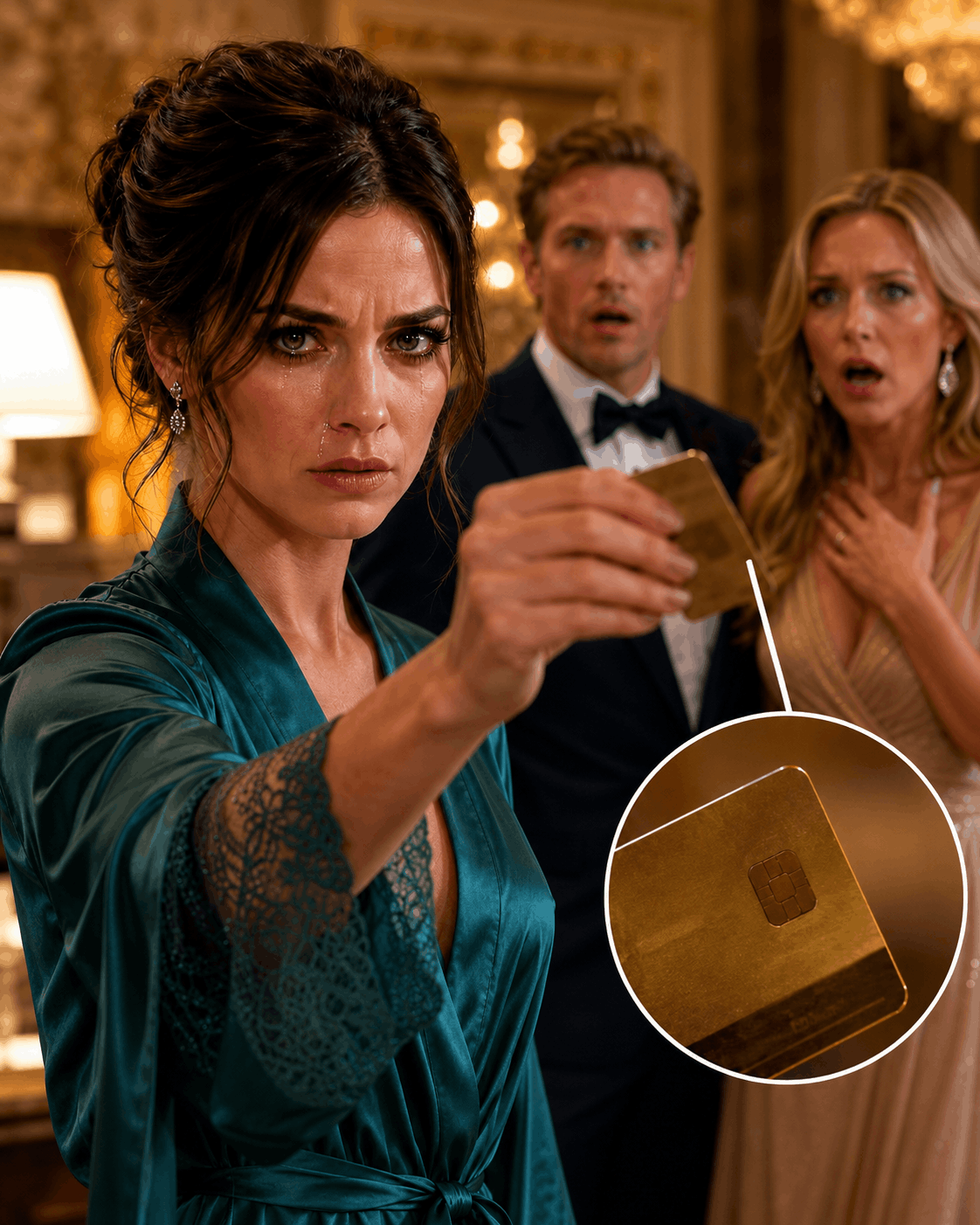
His mistress mailed me their honeymoon itinerary with my credit card attached, then wrote, “Hope you enjoy knowing where he chose me
His mistress mailed me their honeymoon itinerary with my credit card attached, then wrote, “Hope you enjoy knowing where he chose me.” She thought I would scream, cry, and embarrass myself while they flew first class to paradise. What she did not understand was that the last four digits on that booking were tied to my private business account. By the time they reached the airport, I was not broken. I was already holding evidence.
The envelope arrived at my townhouse on East 73rd Street in Manhattan like an insult dressed for a gala. Ivory paper, gold seal, perfect handwriting, and a travel packet thick enough to make the cruelty feel expensive. Inside were first-class flights to Bora Bora, a private villa, champagne, massages, and a romantic package my husband had never once planned for me.
His name was on the reservation beside hers. Her name was Sloane Avery. She was younger, polished, and very sure the world would forgive her because she looked delicate while hurting people.
My husband, Bennett Whitmore, came from the kind of family that believed scandal was only scandal if poorer people found out. They had old portraits, old money, and old excuses. I had spent ten years making his life look stronger than it really was.
I did not call him. I did not call her. I did not post a crying video or throw his clothes onto the sidewalk so strangers could clap for my pain. I sat at my breakfast table, read the booking confirmation, and looked at the card ending in 3918.
Then I recognized the account.
That card was not Bennett’s. It was connected to Vale House Group, my private business account, the one he used to call my “little side project.” That little side project owned hotels, property, and quiet leverage he had never bothered to understand. Men like Bennett do not fear what they think belongs in the background.
That was his first mistake.
I called my CFO and froze the card. I called the travel company and canceled the reservation. I filed the fraud claim before they even finished their champagne at JFK. Then I called my attorney, Mara Ellis, and told her exactly what had arrived in the mail. Her only instruction was, “Do not confront him.”
That evening, Bennett called again and again. His texts went from confused to angry in less than ten minutes. “Clara. Did you cancel something?” Then, “Call me now.” Then the one that almost made me laugh: “This is embarrassing.”
He came home after midnight still wearing his travel blazer, furious because paradise had closed its doors. He stepped into the library and asked what the hell I had done. I looked at him calmly and told him I had canceled an unauthorized charge to my company. He said it was a mistake. I asked him if a twelve-day, seventy-eight-thousand-dollar honeymoon with his mistress counted as a mistake.
His face changed, but only for a second. Then he did what weak men do when receipts enter the room. He tried to negotiate instead of apologize. He told me not to make things uglier than they needed to be. He said we could handle everything privately, like adults. He said I had humiliated him.
That was when I looked at the man I had protected for ten years and realized he still thought I was afraid of losing his name.
The next morning, a note sat on the breakfast table in his handwriting. It said, “We need to manage the narrative.”
I placed it in an evidence sleeve.
Because Bennett still believed this was about reputation, but my attorney had already found the one clause his mother had written to protect the Whitmore family from me. And now that clause was pointing at him.
—
Mara arrived at the townhouse at seven the next morning with two coffees and a document she had tabbed in four places.
She set it on the breakfast table beside Bennett’s note, still in its evidence sleeve, and said, “Have you read the Whitmore family trust agreement?”
“He never showed it to me,” I said.
“He wouldn’t have.” She opened to the first tab. “His mother drafted this in 2009, two years before you married. It was written to protect Whitmore family assets from any spouse Bennett might acquire.” She paused. “The language is very precise. It defines protected assets as anything originating from Whitmore family capital.”
“Which excludes Vale House,” I said.
“Entirely. Vale House Group was built on your capital, your credit, your contacts. Bennett contributed nothing to it financially.” Mara turned to the second tab. “But here is where it gets interesting. The clause his mother wrote to protect the family from you also defines the threshold for what constitutes marital misconduct.”
I looked at the page.
“His mother wrote the definition herself,” Mara said. “Unauthorized use of a spouse’s private financial accounts. Misrepresentation of assets during the marriage. Introduction of a third party into the marital household finances.” She looked at me. “Sloane Avery’s name is on a supplementary card tied to Bennett’s personal account. An account that received three transfers from the Whitmore trust during the marriage.”
I set down my coffee.
“His mother’s clause,” I said slowly, “triggers against him.”
“In four separate places,” Mara said. “If we file under the trust’s own misconduct provision, the protected assets don’t transfer to him in the divorce. They revert.” She turned to the third tab. “There’s more. The fraud claim you filed yesterday on the Vale House card flagged two prior transactions. Same card. Same billing pattern. This wasn’t the first time, Clara.”
The room was very quiet.
“How many times?” I asked.
Mara looked at me steadily. “Seven. Over fourteen months.”
I looked at Bennett’s note in its evidence sleeve. We need to manage the narrative.
“He’s been planning this longer than I thought,” I said.
“Yes,” Mara said. “But so have we.” She turned to the fourth tab. “There’s one more thing. The supplementary card on Bennett’s account — the one Sloane has been using — was applied for using a Vale House Group address.”
My address. My company’s address.
“That’s identity fraud,” I said.
“That,” Mara said, closing the folder, “is exactly what I told the DA’s office this morning.”
My phone buzzed on the table. Bennett. I turned it face down.
Then the front door opened with a key that should no longer have worked, and Bennett Whitmore walked into his own narrative too late to change it.
Bennett saw Mara first.
He stopped in the doorway of the breakfast room with his coat still on and his keys in his hand and his face doing the calculation men like him always do when they walk into a room and find it already arranged against them.
“Clara,” he said. “I didn’t know you had company.”
“You didn’t knock,” I said.
“I have a key.”
“Had,” Mara said pleasantly. She did not look up from the folder.
Bennett looked at me. “I came to talk. Privately.”
“Anything you’d like to say to me you can say in front of my attorney,” I said. “Sit down, Bennett.”
He did not sit. He set his keys on the sideboard the way he always did, the small habit of a man who needed to feel at home in a room even when the room had stopped being his. Then he looked at the folder on the table and at Bennett’s note in its evidence sleeve and at the two coffee cups and at my face.
“How long has she been here?” he asked.
“Long enough,” Mara said.
He pulled out the chair across from me and sat down. He had not taken off his coat. I noticed that. Bennett always took off his coat. Keeping it on meant he had not decided yet whether he was staying.
“I want to explain about the card,” he said.
“Which time?” I asked.
His eyes moved to mine. “What?”
“The card was used seven times over fourteen months,” I said. “I’m asking which time you’d like to explain.”
The coat stayed on. But his shoulders dropped a quarter inch and I had known this man for twelve years and I knew what that meant. He had come here believing I knew about Bora Bora. He had not known I knew about the rest.
“Clara—”
“The first transaction was in October of last year,” I said. “Eleven thousand dollars to a residential interior design firm. I looked it up this morning. They specialize in high-rise apartments on the Upper West Side.” I folded my hands on the table. “Is that where she lives, Bennett? Did you decorate her apartment with my company card?”
He said nothing.
“The third transaction was to a jeweler on 57th Street,” I said. “Four thousand, six hundred dollars. I don’t own anything new from that jeweler. Do you want to tell me what was purchased or should I call them myself?”
“You don’t need to call anyone,” he said.
“Then tell me.”
He looked at Mara. “Is this conversation being recorded?”
“Do you have a reason to be concerned about that?” Mara asked.
He looked back at me. Something in his face had shifted from the negotiating expression he had worn the night before into something older and less rehearsed. I had seen this face before. Not often. Bennett was careful about what he let show. But I had seen it once when his father’s health had deteriorated suddenly and he had not known how to be afraid in front of anyone, and the expression had slipped for just a moment before he put it away.
He was afraid now.
“I made mistakes,” he said.
“Yes,” I said.
“I’m not going to pretend otherwise.” He leaned forward. “But Clara, if this goes the way you’re setting it up to go, it hurts both of us. The Whitmore name is tied to Vale House whether you want it to be or not. If the fraud claim becomes public—”
“The fraud claim is already with the DA’s office,” Mara said.
The color left his face.
“As of this morning,” she continued. “Along with documentation of all seven transactions and the application for the supplementary card using a Vale House Group address.” She paused. “That last piece is identity fraud, Bennett. That’s not a civil matter.”
He stood up. The chair scraped back hard.
“That application was a clerical error,” he said. “Sloane filled out the form and she used the wrong address—”
“Sloane Avery filled out a credit application using your wife’s company address,” Mara said. “In your name. With your signature.” She opened the folder to the third tab. “Is this your signature?”
He looked at the page. His jaw tightened.
“Is that your signature, Bennett?” Mara asked again.
“You know it is,” he said.
“Then it wasn’t a clerical error,” she said. “Sit down.”
He sat.
The room was quiet for a long moment. Outside on East 73rd Street a car passed and then another and the city continued its indifferent morning without any interest in what was happening at my breakfast table.
“What do you want?” Bennett asked finally. He was looking at me, not Mara. That was the first honest thing he had done since he walked through the door.
“I want to know one thing first,” I said.
He waited.
“The note this morning,” I said. “We need to manage the narrative. Whose narrative were you managing? Mine or yours?”
He was quiet for too long.
“Yours,” he said. “I thought if we handled it quietly—”
“You thought if we handled it quietly you would walk away with the Whitmore assets intact and a clean reputation and Sloane Avery on your arm by spring,” I said. “You weren’t managing my narrative. You were managing your exit.”
He did not deny it.
“The clause,” I said. “Did you know about it?”
His eyes moved to the folder.
“Your mother wrote it to protect the family from me,” I said. “Did you know it would trigger against you?”
“She didn’t write it to trigger against me,” he said. “She wrote it for—”
“For exactly this situation,” Mara said. “Unauthorized use of a spouse’s private financial accounts. Misrepresentation of assets. Introduction of a third party into marital finances. Your mother was very thorough, Bennett. She simply didn’t anticipate that the spouse most likely to commit those acts was you.”
Something crossed his face that I did not have a word for. Not shame exactly. Closer to the specific humiliation of a man who has just understood that the trap his family built to catch his wife has closed around his ankle instead.
“What does the clause mean for the settlement?” he asked.
“It means the Whitmore protected assets don’t transfer to you in the divorce,” Mara said. “They revert under the trust’s own misconduct provision. It means Vale House Group remains entirely Clara’s, which it always was. It means the three trust transfers to your personal account during the marriage are now considered misconduct distributions and will be factored into the settlement.” She turned a page. “It means you leave this marriage with considerably less than you planned.”
Bennett sat with that for a moment.
Then he said something I had not expected. He said it quietly, almost to himself, looking at the table rather than at me.
“She’s pregnant,” he said.
The room went very still.
I looked at him. “Sloane?”
“Yes.”
I breathed once, carefully.
“That doesn’t change what happened,” I said.
“I know,” he said. “I’m not asking you to—I’m not asking for anything.” He pressed his hand flat on the table. “I just thought you should know. Before this goes further. Because it will come out and I didn’t want you to hear it in a deposition.”
I looked at this man I had spent twelve years beside. I had loved him, genuinely and without reservation, for most of those years. I had built a company he called a side project. I had made his life look stronger than it was. I had sat across from his mother at Sunday dinners for a decade while she catalogued my inadequacies in the careful language of a woman who had learned to wound without leaving marks.
And now he was sitting in my breakfast room in his coat telling me his mistress was pregnant and presenting it as a courtesy.
“Thank you for telling me,” I said.
He looked up.
“Mara will be in touch with your attorney this afternoon,” I said. “I’d like you to leave your key on the sideboard.”
He looked at me for a long moment. Then he reached into his coat pocket and placed the key beside his other keys on the sideboard.
He stood. He buttoned his coat. He was almost to the door when he stopped.
“I did love you,” he said. “In the beginning. I want you to know that.”
“I know,” I said. “That’s the part that took me longest to stop being angry about.”
He left.
The door closed.
Mara waited three seconds. Then she said, “Are you all right?”
“Ask me in ten minutes,” I said.
She nodded and turned back to the folder.
The ten minutes passed. Then another ten. Mara made more coffee and I sat at the table where an ivory envelope had arrived two mornings ago like an insult dressed for a gala and I thought about the last fourteen months with the specific clarity that comes when all the information finally arrives at once.
He had been planning the exit for over a year. The apartment, the jewelry, the card, the supplementary application. Bora Bora was not an impulsive romantic gesture. It was a closing ceremony. He had wanted me to see the itinerary. He had wanted me to see my card attached to it. He had given it to Sloane to send because he wanted her fingerprints on the cruelty, not his.
He had wanted me angry and loud and unstable.
He had not wanted me sitting at a breakfast table with my CFO on the phone and my attorney already tabbing a trust document in four places.
“The DA’s office will move on the identity fraud within the week,” Mara said. “The civil filing we can have ready by Thursday.”
“Thursday is fine,” I said.
“Bennett’s attorney will push for a private settlement.”
“I know.”
“Do you want one?”
I thought about it. I had never needed the public version of this. I had not canceled the Bora Bora reservation because I wanted witnesses. I had not filed the fraud claim because I wanted a headline. I had done those things because they were the correct and necessary steps in the correct and necessary order, and because my CFO had flagged the account and my attorney had answered her phone and the work had been done the way I had always done work, quietly and thoroughly and without waiting to be told.
“If he meets the terms,” I said, “private is fine.”
“What are the terms?”
I told her.
Full dissolution of any claim on Vale House Group or its subsidiaries. Return of the three trust distributions with interest. His signature removing himself from the supplementary insurance policies that still listed him as beneficiary on two of my company’s key-person policies. A written acknowledgment of the unauthorized card use, signed, notarized, and held by Mara’s firm. And the Whitmore family trust to proceed under its own misconduct clause without contest from his attorneys.
Mara wrote everything down.
“He’ll fight the last one,” she said.
“His mother wrote it,” I said. “Let her explain to her son why she wrote it the way she did.”
Mara almost smiled. “I’ll call his attorney at noon.”
She left at ten-thirty.
I stood at the window in the front room and looked at East 73rd Street for a while. The morning had cleared into one of those sharp-edged autumn days that Manhattan does better than anywhere, the light coming off the buildings at an angle that made everything look more permanent than it was.
My phone showed fourteen missed calls from Bennett over the past two days. Below those, a text from Sloane Avery sent the morning the envelope arrived. It said only: Hope you enjoy knowing where he chose me.
I had not answered it. I had not saved it to anything. I did not need it.
The fraud claim, the trust document, the DA referral, the fourteen months of transaction records — those were the answer. Everything else was just noise that had arrived in an ivory envelope with a gold seal.
I put the phone in my pocket and went to my office on the third floor.
Bennett’s attorney called Mara at 12:40 p.m.
By 3:15 p.m., he had agreed to the first four terms without significant resistance.
The fifth — the trust misconduct clause — took until the following Tuesday. Bennett’s mother called once during that period, on Sunday evening, and left a voicemail I did not listen to until Mara told me the clause had been confirmed. Then I listened to it once, standing in my kitchen.
She said she had always respected me. She said she hoped I understood that the trust had been written to protect the family and not as any personal statement about my character. She said she wished things had gone differently.
I deleted the message and made dinner.
The civil filing was complete by the end of the month.
The DA’s office issued a formal notice to Bennett and Sloane regarding the identity fraud application two weeks after that. Bennett’s attorney negotiated a resolution that included full restitution and a conditional agreement. Sloane’s attorney handled hers separately. I was not involved in either process beyond providing documentation when Mara requested it.
I did not follow what happened to Sloane after that. She had made her choices in the specific way people make choices when they are very sure the world will forgive them because they look delicate while hurting people. Whatever the world decided to do with that was not my concern.
Vale House Group closed its strongest quarter in six years in December.
My CFO sent me the numbers on a Thursday morning and I read them at my desk with coffee going cold beside me and the autumn light coming through the third-floor window at the angle that made everything look more permanent than it was.
I had built this. Not as a side project. Not as a background thing that a man with old portraits and old money had graciously permitted to exist beside his real life. I had built it the way my grandmother had taught me to build anything worth keeping — slowly, carefully, without making noise about it until the thing was strong enough to stand on its own.
It was standing.
I finished my coffee and opened the next file.
That evening I took the ivory envelope from the drawer where I had kept it and held it for a moment. The gold seal. The perfect handwriting. The expensive cruelty of it.
Then I put it through the shredder.
Not because I needed to forget it. I did not need to forget it. I needed it to be finished, which is a different thing entirely.
The shredder ran for three seconds and then it was done.
I turned off the office light and went downstairs.
The townhouse was quiet in the way it had not been quiet for a long time — not the held-breath quiet of a marriage going wrong in slow motion, but the particular quiet of a space that belongs entirely to the person standing in it.
I poured one glass of wine.
I did not pour a second.
I sat at the breakfast table where two mornings ago everything had clarified, and I thought about the woman who had sent that envelope expecting devastation and instead had handed me the one piece of evidence I needed to begin.
Hope you enjoy knowing where he chose me.
I had enjoyed knowing exactly that.
I raised the glass slightly, to no one in particular, and drank.
The most dangerous thing some people will ever underestimate is a quiet woman who has already done the work. Have you ever had someone mistake your silence for weakness — and lived to see the moment they understood their mistake? Tell me in the comments. I’d love to hear your story.
-
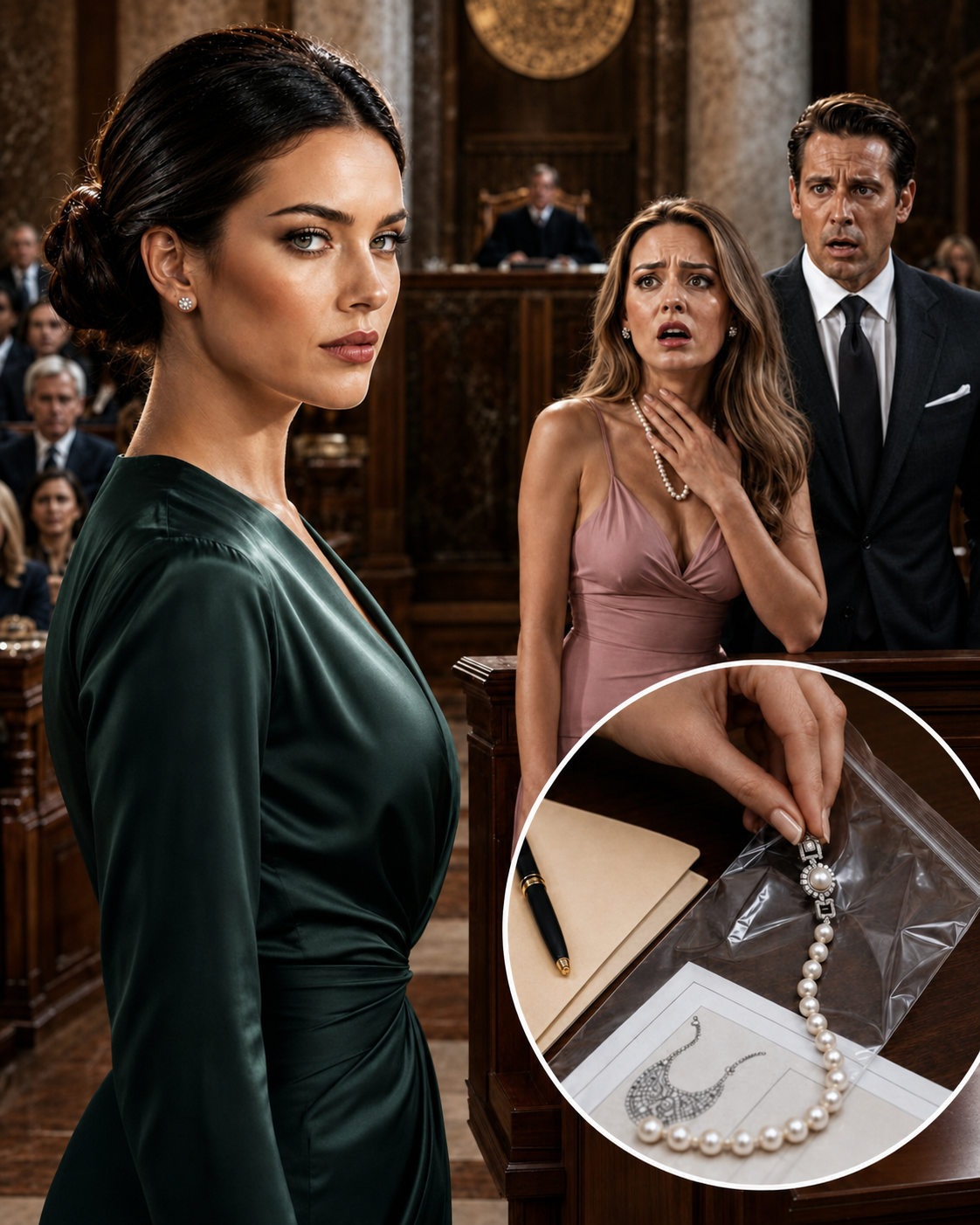
His mistress wore my de@d mother’s pearls to testify against me in court
His mistress wore my de@d mother’s pearls to testify against me in court. My husband sat behind her, looking proud, like she was brave for lying under oath. They expected me to cry, shout, or prove I was unstable. What they did not know was that those pearls came with an appraisal, a police report, and a secret Grant had forgotten I could prove.
I sat at the defense table in a navy silk dress with my hands folded. My throat was bare on purpose. Across the room, Sloane Avery lifted her chin like she had earned those pearls. Grant watched my face, waiting for me to break.
I did not break. My mother had given me those pearls before she died and told me never to cry in a room where someone wanted to enjoy it.
So I looked at Sloane’s soft little courtroom outfit, her trembling voice, and the pearls resting against her neck. Then I glanced at my attorney, Vivian Hart, and she gave me the smallest nod.
Grant’s lawyer called Sloane to the witness stand. She swore to tell the truth with my mother’s pearls glowing under the courtroom lights. She said I was cold, jealous, unstable, and dangerous. She said I had threatened her outside a restaurant and made her fear for her safety. My husband lowered his head like her lies hurt him. His mother sat behind him in winter white, acting like this was all my shame. His father would not look at me.
Everyone in that courtroom seemed ready to believe the betrayed wife had finally lost her mind.
Sloane spoke softly, like every lie was a confession. She said I wanted to ruin her. She said I scared her. Then she touched the pearls and said Grant had given them to her because they belonged to his family.
That was the first mistake.
Grant’s jaw tightened, but he stayed silent. His lawyer should have stopped there, but pride makes people careless. He asked her one more question, and the whole room leaned in.
“Did you steal anything from Mrs. Caldwell?” he asked.
Sloane looked directly at me. “No,” she said. Then she smiled just enough for me to see it.
I remembered the night those pearls disappeared from my private safe. Nothing else was missing. Not my diamonds, not my emeralds, not the watch my father sent me out of guilt every birthday. Only my mother’s pearls.
Grant had opened that safe at 2:16 in the morning. The digital log recorded his thumbprint. The hallway camera showed him leaving my dressing room with a small black jewelry box. He looked straight into the camera and smiled. He wanted me to know. He wanted me angry. He wanted me loud enough to fit the story he had already told the court.
Unstable wife. Jealous wife. Dangerous mother.
That was why I filed the police report quietly. That was why I sent everything to Vivian quietly. That was why I walked into court with no necklace and no tears. They thought my silence meant I had nothing.
Vivian rose slowly when it was our turn. She carried one cream folder, not a stack of papers. Grant finally looked nervous. Sloane’s fingers curled around the pearls like they could protect her.
Vivian asked her about the restaurant first. Sloane said I threatened her outside Le Jardin on December 14 at about nine at night. Vivian nodded and placed a document on the table.
Le Jardin had been closed for renovations since November 28.
The courtroom went quiet. Sloane blinked. Grant’s mother stopped breathing like a woman trying not to make a scene.
Vivian turned the next page and said, “Now let’s talk about the necklace.”
The courtroom did not move.
Sloane’s hand was still curled around the pearls. Her knuckles had gone white.
Vivian opened the cream folder and placed a single photograph on the table. She did not rush. She did not explain. She simply turned it so the judge could see it clearly.
“Ms. Avery,” Vivian said, “do you recognize this image?”
Sloane leaned forward. Then she sat back. Something behind her eyes went very still.
“That’s a hallway,” she said carefully.
“It is,” Vivian agreed. “Specifically, it is the hallway outside Mrs. Caldwell’s private dressing room. Taken at 2:16 in the morning on November 9th.” She paused. “Do you see the man in the image?”
Grant’s attorney was on his feet. “Objection. Relevance.”
The judge looked at Vivian. “Counselor?”
“The witness testified that those pearls were a gift,” Vivian said. “I am establishing how they left Mrs. Caldwell’s possession.”
“Overruled. Continue.”
Sloane’s fingers loosened around the pearls. Just slightly. Just enough.
“Ms. Avery,” Vivian said. “Is that your husband in this photograph?”
“He’s not my husband,” Sloane said quickly.
“Is that Grant Caldwell?”
A pause. “Yes.”
“And what is he carrying?”
Sloane looked at Grant. He did not look back at her.
That was the moment. I watched it happen from the defense table. Six months of his promises and his careful stories and his version of everything, and he would not look at her when it mattered.
“A box,” Sloane said quietly.
“A small black jewelry box,” Vivian said. “Consistent in size and shape with the box in which Mrs. Caldwell stored her mother’s pearls.” Vivian reached into the folder. “I’d like to enter the digital security log as Exhibit F. The thumbprint recorded at 2:16 a.m. belongs to Grant Caldwell. The log was certified by the security company on November 12th.”
Grant’s mother shifted in her seat behind him. I heard the sound of it. A small scrape of a chair. The sound of someone realizing the room had changed.
Grant leaned to his attorney and said something low and fast.
His attorney stood. “Your Honor, we’d like to request a brief recess.”
The judge looked at him for a long moment. “We’ll finish the cross-examination first.”
Vivian turned back to Sloane.
“Ms. Avery,” she said. “I want to give you one more opportunity.” Her voice was not unkind. “Did Grant Caldwell give you those pearls as a gift?”
Sloane looked at Grant one more time. He was writing something on a notepad. He did not look up.
Her hand fell away from the pearls.
Then Vivian asked the question no one in that courtroom expected. And the answer Sloane gave changed everything.
…
Sloane looked at the pearls.
Not at Grant. Not at the judge. Not at Vivian or me or the packed rows of the courtroom. Just at the pearls, the way you look at something when you are trying to decide what it is worth to you now that everything has changed.
“He told me she had thrown them away,” Sloane said.
The courtroom was very still.
“I’m sorry?” Vivian said.
“Grant.” Sloane’s voice was flat now. The soft trembling was gone. “He told me Eleanor had thrown them away after her mother died. That she couldn’t stand to look at them. He said they were just sitting in a box in storage and that it would be a shame to waste them.” She paused. “He said if I wore them in court it would rattle her.”
Someone in the gallery made a sound. A small sharp intake of breath.
Grant’s attorney put his pen down.
I kept my hands folded on the table. My mother had told me never to cry in a room where someone wanted to enjoy it. She had not said anything about the rooms where no one was enjoying anything anymore.
Vivian let the silence hold for three full seconds. Then she said, “Ms. Avery, are you aware that lying under oath is perjury?”
“Yes,” Sloane said.
“And the incident outside Le Jardin on December 14th—”
“I was in Connecticut on December 14th.” Sloane looked at her own hands. “Grant wrote out what happened. He said it was close enough to true that it would hold.”
Grant’s attorney stood. “Your Honor, I need to request—”
“Sit down, counselor,” the judge said. He had not moved from the moment Sloane’s hand dropped from the pearls. “Ms. Avery, I want to be certain I understand your testimony. Are you telling this court that your previous statements were prepared for you by Grant Caldwell?”
“Not all of them,” Sloane said. “But the restaurant. And the part about the threats.” She finally looked at me. “She never threatened me. I’ve never been afraid of her. Grant said the story needed that or it wouldn’t be enough.”
The gallery broke open behind me. The judge brought his gavel down once, hard, and the room went quiet again but a different kind of quiet. The kind that comes after something has already fallen.
Grant was on his feet before his attorney could stop him.
“Sloane,” he said.
The judge said, “Mr. Caldwell, sit down.”
“She doesn’t know what she’s saying—”
“Mr. Caldwell.” The judge’s voice did not rise. It did not need to. “Sit down or I will have you removed.”
Grant sat. But his eyes stayed on Sloane. Not with the pride he had worn when she first took the stand. With something uglier. The specific look of a man who has just watched his most useful tool decide to stop being useful.
Sloane did not look back at him.
Vivian turned to the judge. “Your Honor, in light of the witness’s revised testimony, we’d like to move that her prior statements be stricken from the record and request that the court note the circumstances under which they were prepared.”
“So noted,” the judge said. He looked at Grant’s attorney. “Counselor, I’d strongly suggest you consult with your client during recess. We’ll reconvene in twenty minutes.” He stood. “And I’ll be referring Ms. Avery’s testimony to the district attorney’s office for review.”
The gavel came down again.
The room exhaled.
Vivian touched my arm as the gallery noise rose behind us.
“Stay seated,” she said quietly. “Let them move first.”
So I sat. I watched Grant lean into his attorney, one hand flat on the table, talking fast and low. I watched his mother stand and put her hand on his shoulder and then remove it when he shook her off. I watched his father, who had not looked at me once during the entire proceeding, stand and walk toward the exit without speaking to anyone.
Sloane was still on the witness stand. A court officer had approached her and was speaking quietly. She was nodding. Her hands were in her lap.
She had taken the pearls off.
They were sitting on the railing in front of her, coiled on the wood like something that had been set down carefully and would not be picked up again.
Vivian was making notes. I looked at the pearls.
My mother had bought them herself, which was the thing Grant had never understood and could never have understood. She had not inherited them or received them as a gift. She had saved for eleven months working double shifts at the hospital where she spent most of her adult life, and she had bought them for herself because she had decided she deserved something beautiful and permanent. She wore them to every important occasion for thirty years. She wore them at my college graduation. She wore them in the hospital at the end, when she was too tired to wear much of anything, because she said they made her feel like herself.
She had placed them around my neck the week before she died and said, “These are for the days when you need to remember who you come from.”
I had needed those days. I had needed them badly in the last two years.
“Eleanor.”
Vivian was looking at me.
“You can breathe,” she said.
I breathed.
The recess lasted forty minutes, not twenty.
When Grant’s attorney came back into the courtroom he looked like a man who had aged between the door and the table. He spoke to the judge in a low voice for several minutes before the session resumed.
Vivian leaned to me. “They want to discuss settlement terms.”
“Now?” I said.
“His criminal exposure just changed significantly,” she said. “Suborning perjury on top of the asset concealment. He’s doing math.” She looked at me. “What do you want, Eleanor? And I mean what you actually want, not what you think is reasonable.”
I thought about the question. I had spent so long being reasonable. Staying quiet. Filing things quietly. Walking into rooms with my hands folded and my throat bare and my face arranged into an expression that gave nothing away. I had been so focused on not becoming the woman Grant had described in this courtroom that I had not let myself think clearly about what I wanted when it was over.
“Full custody,” I said. “No shared decision-making. Visitation on a structured schedule with no overnight access until a family court evaluation is completed.”
Vivian wrote it down.
“The house,” I said. “He can have the apartment. I want the house.”
“Done,” Vivian said.
“His share of the Caldwell Group portfolio that was built during the marriage. My attorney fees. And a formal letter, signed, acknowledging that the testimony prepared for this proceeding was fabricated at his direction.”
Vivian looked up. “That last one is the one his attorney will fight hardest.”
“I know,” I said. “I want it anyway.”
She nodded once and stood.
Grant looked at me once across the courtroom while Vivian spoke with his attorney at the judge’s bench.
I had known this man for nine years. I had built a life with him that included a house and a child and a set of assumptions about who he was that had taken me too long to revise. I had watched him be charming and funny and occasionally kind in the specific way of men who know exactly how much kindness is required to maintain a situation. I had watched him decide, somewhere in year six or seven, that I had become an obstacle rather than a partner, and I had watched him begin, quietly and methodically, to build a case against me before I had any idea a case was being built.
He had underestimated what I had learned about quiet and methodical.
He looked away first.
His attorney came back to the table twenty minutes later and the negotiation took two more hours. Grant’s mother left at the one-hour mark. She walked past me without speaking and I did not watch her go.
At 4:47 p.m. Grant Caldwell signed a settlement agreement that included every item on my list, including the letter.
His attorney handed it across the table without meeting my eyes.
Vivian placed it in front of me. I read it once. Then I signed my name at the bottom with the pen I had carried in my coat pocket since the morning, the one my mother had given me when I passed the bar, before I left law to raise our son and support Grant’s career, a decision I had made freely and did not regret and which Grant had used against me in three separate filings.
I clicked the pen closed and set it on the table.
“Done,” I said.
Vivian walked me to the car. The afternoon had gone gray and cold and the courthouse steps were nearly empty.
“The DA’s office will contact you,” she said. “Likely within the week. They’ll want your cooperation on the perjury referral.”
“They’ll have it,” I said.
“The asset concealment piece is separate. That moves slower. But it moves.” She looked at me. “You did well in there, Eleanor.”
“My mother told me not to cry in rooms where someone wanted to enjoy it,” I said.
Vivian smiled slightly. “Smart woman.”
“She was,” I said.
The car was waiting at the bottom of the steps. I stood for a moment in the cold air.
“What happens to Sloane?” I asked.
Vivian was quiet for a moment. “That depends on how cooperative she is with the DA. She came apart on the stand voluntarily. That matters. But she still swore to statements she knew were false.” A pause. “She made her own choices, Eleanor. You don’t have to carry those.”
I nodded.
I did not feel triumphant. I had expected to, in the early months, when I was still angry enough that triumph seemed like it would feel like something. But standing on the courthouse steps in the cold, all I felt was the specific tiredness of someone who has been holding something heavy for a very long time and has finally been permitted to set it down.
I got in the car.
My son was at my sister’s house. I called from the car and he answered on the second ring.
“Mom,” he said. “How did it go?”
“It went well,” I said. “I’ll tell you everything when I see you.”
“Did you win?”
I looked out the window at the city moving past.
“Yeah,” I said. “We won.”
He made a sound that was half relief and half something he was trying not to let me hear, and I loved him so much in that moment that my chest hurt with it.
“I’ll be there in twenty minutes,” I said.
That evening, after dinner, after my son had fallen asleep on the couch with his shoes still on and I had covered him with the blanket from the back of the chair, I sat at my sister’s kitchen table with a cup of tea I had stopped drinking and the pearls in my hands.
They were warm from being held.
My mother had worked eleven months of double shifts for these. She had worn them to every important occasion. She had put them around my neck in a hospital room and told me to remember who I came from.
I came from a woman who bought herself beautiful and permanent things.
I came from a woman who did not cry in rooms where someone wanted to enjoy it.
I came from a woman who had taught me, without ever saying it plainly, that silence is not the same as surrender, that preparation is not the same as coldness, and that the most dangerous thing you can underestimate is a quiet woman who has already done the work.
I set the pearls on the table in front of me. In the morning I would take them to be re-strung. The jeweler my mother had always used was still on Clement Street. I had called ahead. She remembered my mother. She said she would make time.
I wrapped my hands around the cooling cup.
My son breathed steadily in the next room.
Outside, the city was doing what cities do, indifferent and continuous and bright.
I did not feel like a woman who had survived something.
I felt like myself.
That was better.
The women who raised us give us more than we know — sometimes it takes a room full of people trying to break us to find out how much they left behind. Did someone in your life give you the quiet kind of strength that only shows up when you need it most? Share it in the comments. I’d love to read it.
-

His mistress wore the lace bolero from my wedding dress to her engagement brunch
His mistress wore the lace bolero from my wedding dress to her engagement brunch. My husband stood beside her like I was the embarrassing part of the room. His mother said old things should live again, and everyone expected me to cry, leave, or make myself small. What they did not know was that the lace was not just lace, and the room they laughed in was already turning against them.
I stepped into the Palm Court at the Plaza wearing a black coat, pearl earrings, and no invitation. The string quartet was playing softly under the glass ceiling. White flowers covered every table like the whole room had been dressed for a wedding. Except this was not mine.
Sloane Whitaker stood in the center of it all with one hand on her pregnant stomach. She wore a champagne silk gown, bright lipstick, and my grandmother’s lace across her shoulders. It was the same lace I wore when I married Preston Hayes six years earlier. The same lace that had been sealed with my wedding dress in the cedar room at Rosemere.
Preston saw me first, and his smile died for half a second. Then he crossed the room with that calm rich-man face he used when he wanted everyone else to feel unreasonable. “Avery,” he said softly, “try not to make a scene.”
I looked past him at the lace. Sloane touched the little clasp at her throat and smiled. “I hope you don’t mind,” she said, like she had borrowed earrings from a friend. Her voice was soft, but her eyes were smug. She wanted the room to see that she had taken more than my husband.
Then Marjorie Hayes rose from the head table. Preston’s mother wore ivory tweed and pearls, like cruelty needed a dress code. “It looks better with her modern gown,” she said loudly. Then she added, “Old things should live again.”
I did not yell. I did not lunge. I walked closer until I could see the seam under Sloane’s right shoulder. Someone had cut the bolero from my preserved wedding dress with scissors, and they had done it badly.
For a moment, I was back in that cedar room two days earlier. I remembered opening the archival box and seeing my gown lying there with its shoulders bare. I remembered touching the torn fabric and realizing someone had not borrowed my past. They had cut it out.
Preston stepped between us. “Walk away, Avery,” he said. He sounded bored, like my pain was interrupting his brunch. That was his mistake. He still thought I had come as his wife.
I looked at him and then at Sloane. The photographers were still near the dessert table. Half the room had their phones hidden in their laps. Everyone wanted to watch me break politely.
I removed my gloves finger by finger. The room went quiet. Marjorie lifted her chin, waiting for tears. Sloane smiled wider.
“Take it off,” I said.
Sloane blinked. Preston’s jaw tightened. Marjorie said, “You will not humiliate a pregnant woman in public.”
I turned to her and said, “You humiliated a wife in public.”
That was when Preston noticed my phone. His eyes dropped to the screen, then back to my face. I checked the time. 10:03 a.m.
“What are you doing?” he asked.
“Watching,” I said.
“For what?”
I glanced toward the entrance. Two men in dark suits walked into the Palm Court. Behind them came my attorney, Helena Price, holding a leather folder. Preston’s face changed before she said a word.
Helena stopped beside me and opened the folder. Detective Maria Calder walked in right behind her with a badge at her belt. The room froze. Sloane’s hand slid from her stomach to the stolen lace. Preston stared at me.
“You brought a lawyer to brunch?” he asked.
I touched the torn seam one last time. Then I looked at his mistress, his mother, and the stolen lace on her shoulders.
“No,” I said. “I brought three.”
The room did not move.
Preston’s eyes went from Helena to Detective Calder, then back to me. For the first time in six years, I watched him calculate and come up empty.
“This is a private event,” he said. His voice was still controlled, but his hands were not. He had pressed one flat against the table.
Helena opened the folder without looking at him. “Mr. Hayes, you’ve been served.” She placed the documents on the white linen like she was setting a place for dinner.
Sloane made a small sound. Not words. Just air leaving her body.
Marjorie stepped forward. “Preston, call Gerald right now.”
“Gerald is already aware,” Helena said pleasantly.
That was when Sloane turned to Preston. Not to me. To him. And the look on her face was not the smug smile from five minutes ago. It was something colder. Something that asked a question she had not expected to need answered.
“What is she serving you?” Sloane asked.
Preston did not answer her.
“Preston.” Her voice sharpened. “What is in that folder?”
He straightened his jacket. That small, practiced move he always made when he needed a second to think. I had watched him do it in boardrooms for years. I knew what it meant.
He did not know everything that was in that folder either.
Detective Calder stepped beside Helena. “Ms. Whitaker,” she said, “we’ll need a few minutes of your time as well.”
Sloane’s hand went back to her stomach. “I don’t understand—”
“The lace,” I said quietly. “It was cut from a sealed preservation box. That’s destruction of documented marital property.” I paused. “But that’s the smaller charge.”
The color left Sloane’s face.
Preston looked at me then. Really looked at me. Like he was seeing something he had miscalculated badly.
“Avery,” he said. “Whatever you think you know—”
Helena touched my arm once. A signal.
I picked up my gloves from the table. One photographer near the dessert station had stopped pretending to look away.
Then my phone buzzed. I read the message. And for the first time that morning, I felt something close to relief.
Except when I looked up, Marjorie was already on her phone in the corner. And the person she was calling was not Gerald.
…
Helena’s hand closed around my wrist before I could cross the room.
“Let Marjorie make that call,” she said.
“You know who she’s calling?”
“I’m counting on it.” Helena closed the folder and nodded toward Detective Calder. “Give her three minutes.”
I watched Marjorie in the corner. Her back was turned, one hand pressed flat against the wall like she needed it to hold her up. Her voice was low and fast and she was nodding at whatever the other person said.
Sloane had not moved. She was still standing in the center of the room with the stolen lace across her shoulders and the color gone from her face. The photographers had stopped pretending. Half the engagement brunch was now an audience.
Preston came to my left. Close enough that I could smell his cologne. The same one he had worn the morning he told me the marriage had simply run its course.
“You’re making a mistake,” he said quietly.
“You cut my grandmother’s lace off a preserved wedding dress,” I said. “Which part of this is my mistake?”
“I didn’t touch your dress.”
I turned to look at him. “I know.”
Something shifted in his face.
“Then what is this really about?” he asked.
“The accounts, Preston.”
His jaw tightened.
“The Cayman account you opened four months before you asked for the divorce,” I said. “The one Gerald helped you structure. The one that received eleven transfers from our joint assets while you were telling me we needed to simplify our finances.”
He said nothing.
“Helena has the wire records,” I said. “Detective Calder has a forensic accountant on her team. And the folder you were just served with is a civil filing, not a criminal one.” I paused. “The criminal referral went to the DA’s office yesterday morning.”
Preston looked at the folder on the table. Then at Helena. Then back at me.
“You’ve been building this for how long?” he asked.
“Since the morning I opened that cedar box and found my dress with its shoulders bare,” I said. “Someone who could walk into Rosemere without triggering the alarm system. Someone who knew the cedar room code. Someone who had been in that house as recently as three weeks ago.” I looked at him. “The security log doesn’t lie, Preston.”
His mouth opened. Then closed.
Across the room, Marjorie ended her call. She turned and her eyes found mine. Not Preston’s. Mine. And I understood then that whatever she had just been told, it had not gone the way she expected.
She walked toward us slowly. The ivory tweed. The pearls. The chin still lifted.
“You should know,” she said, stopping in front of me, “that you are embarrassing yourself.”
“Marjorie,” Helena said pleasantly, “you just called Warren Tillis.”
The chin stayed up. But something behind her eyes moved.
“Warren Tillis is currently being interviewed by Detective Calder’s colleague in the lobby,” Helena continued. “He arrived twenty minutes ago. We asked him to wait.”
Warren Tillis was Marjorie’s personal attorney. He had also notarized three of the eleven asset transfers.
Marjorie said, “That is not possible.”
“He came voluntarily,” Helena said. “He’s been cooperative for about two weeks now.”
Preston turned to his mother. “You used Tillis for the transfers?”
Marjorie said nothing.
“Mother.” His voice dropped. “Tell me you did not use Tillis.”
“I was protecting you,” she said.
“From what?”
“From her.” Marjorie pointed at me without looking at me. “She was never right for this family. She was always going to take what she could and—”
“She built half of what I have,” Preston said. Something I had never heard before was in his voice. Not guilt. Closer to the specific exhaustion of a man who has just understood the full cost of a decision he cannot undo. “The Meridian deal. The Hargrove restructure. That was her work.”
Marjorie said, “The family name—”
“Stop.” He said it once and she stopped.
The room was very quiet. The string quartet had not played in several minutes.
Sloane spoke from the center of the room. “Can someone please tell me what is happening?”
Everyone looked at her.
She was still holding the clasp at her throat. The champagne silk. The stolen lace. She looked younger suddenly. Less like someone who had won something and more like someone who had walked into a building without checking what it was.
“The lace,” I said, and I crossed the room toward her. Not fast. There was no need to move fast anymore.
I stopped in front of her. This close, I could see the rough edge where the scissors had gone through the original seam. Whoever had done it had been careless or in a hurry. Probably both.
“I’m not angry at you,” I said. And I meant it. I had been, early on, but that had burned down to something quieter over the months. “You didn’t know what you were taking when you put it on.”
Sloane looked at me carefully. “What do you mean?”
“My grandmother brought that lace from Galway in 1951,” I said. “She wore it at her wedding. My mother wore it at hers. I wore it at mine. It was the only thing in that cedar room I would not have been able to replace.” I reached up and unclipped the clasp at her throat. She let me. “It’s not a prop. It’s not a statement. It’s just something that belongs to the women in my family.”
I held the bolero in both hands. The lace was intact. Whoever had cut it had taken the whole piece cleanly enough that it had not been damaged. That was the one thing that had gone right.
Sloane said, quietly, “I didn’t know it was preserved. He told me it was just stored.”
I looked at her. “Did he tell you about the accounts?”
A long pause.
“No,” she said.
I nodded once. Then I walked back to Helena.
Detective Calder returned from the lobby eleven minutes later. She stopped beside Helena and said something low that I did not catch. Helena’s expression did not change, but she turned one page in the folder.
“Mr. Hayes,” Helena said, “Tillis has confirmed his role in the notarizations. He’s provided documentation of the instruction chain.” She looked at Preston. “The instructions came from this address.” She set a single page on the table.
Preston looked at it. Then he looked at his mother.
Marjorie had gone very still.
“You signed the instruction letters,” Preston said. Not a question.
“I was acting on your behalf—”
“I never asked you to move the accounts,” he said. “I asked you to talk to Tillis about the estate structure. That was all.”
“You needed to be protected—”
“From my own wife.” The exhaustion in his voice had become something else. “You structured eleven transfers without telling me. You used my power of attorney—”
“It was still valid—”
“It was valid for the property sale in March,” he said. “Not for this.”
Marjorie said nothing.
Preston picked up the page. He read it twice. Then he set it back down and did not touch it again.
“Gerald is going to tell you there is a defense,” he said finally. “There isn’t. Not if Tillis has already given them the chain.” He turned to Helena. “What does she want?”
Helena looked at me.
I had thought about this moment for eight months. I had rehearsed it in the car, in the early mornings, in the cedar room with the empty archival box on the floor beside me. I had imagined saying something that would land like a door closing.
But standing there in the Palm Court with the white flowers and the quiet string quartet and the lace folded in my hands, I found I did not want a line.
I wanted it to be over.
“Full restitution of the transferred assets,” I said. “The Rosemere deed returned to my name alone. His signature off the Meridian licensing rights, which were mine before the marriage. And a formal acknowledgment, in writing, of his role in the asset transfers — not his mother’s role. His.”
Preston said, “And if I agree to that?”
“Then Helena files the civil agreement and the DA’s office is informed that full cooperation has been given,” I said. “What they do with that is not my decision.”
He was quiet for a long moment.
Sloane had moved to a chair near the window. She was sitting with her hands in her lap, looking out at Fifth Avenue. She did not look like someone who had won an engagement brunch. She looked like someone who was doing arithmetic and not liking the sum.
“All right,” Preston said.
Marjorie said, “Preston—”
“Mother.” He did not raise his voice. “Sit down.”
She sat.
Helena and I left the Palm Court at 11:40 a.m.
The white flowers were still on every table. The glass ceiling was still full of light. Two of the photographers were outside on the steps and they moved toward us, but Helena stepped in front smoothly and said something brief that made them stop.
We stood on the sidewalk on Central Park South. The late morning was cold and clean.
“Tillis really came voluntarily?” I asked.
“He called us,” Helena said. “Three weeks ago. He did not enjoy being the last person holding documentation that named him as the notary on eleven questionable transfers.”
“And Marjorie?”
Helena was quiet for a moment. “The DA’s office will decide what to do with the instruction letters. That’s not a small thing, Avery. Using a power of attorney outside its defined scope, on that scale, for that amount — that carries consequences.”
I looked up at the Plaza. Somewhere inside, Preston was still standing at a white-flowered table with a leather folder in front of him.
“He didn’t know,” I said. Not defending him. Just saying what was true.
“No,” Helena agreed. “He didn’t know all of it. That won’t help him as much as he hopes, but it’s true.”
I held the lace bolero in both hands. In the daylight, I could see where the scissors had gone through. The cut was rough at one edge but the lace itself was unbroken. My grandmother’s hands had made this. In a room I would never see, in a country I had only visited once, she had made something that had lasted long enough to travel across three weddings and one very bad engagement brunch.
I folded it carefully and put it in my coat pocket.
Helena said, “Are you all right?”
I thought about the cedar room. The empty archival box. The eight months of bank records and security logs and calls with forensic accountants at seven in the morning. I thought about the night I sat on the floor of the Rosemere kitchen and understood that the man I had married had not left me for another woman. He had been restructuring the exit for two years before he told me.
“I will be,” I said.
Helena nodded like that was the right answer. She flagged a cab and got in.
I stood on the sidewalk for another minute.
Then I walked to the corner, turned south, and did not look back at the Plaza once. There was nothing behind me I needed to see.
That night I made dinner for one, poured one glass of wine, and set the bolero on the kitchen table under the lamp. I had a number for a textile conservator in the West Village who specialized in antique lace. I would call her in the morning.
My grandmother had brought this across an ocean. My mother had worn it on the happiest day of her life. I had worn it on a day that turned out to be something else entirely.
It had survived all of that.
So had I.
Sometimes the things people try to take from us are the very things that remind us who we are. Have you ever had someone underestimate how prepared you were? Share your story in the comments — I’d love to hear it.
-
A widowed father was turned away from his own hotel while holding his sleeping daughter in his arms…
A widowed father was turned away from his own hotel while holding his sleeping daughter in his arms… but by the time the employees learned who he really was, the harm had already been done.
“Sir, with a sleeping child and those sad-looking flowers, you might be better off trying a cheaper motel a few blocks away.”
Ethan Vance stood still in front of the gleaming marble reception desk of the Grand Regent Hotel, right in the heart of downtown Chicago. His six-year-old daughter, Lily, was asleep against his shoulder, her small body heavy with exhaustion. In his other hand, he held a bouquet of red roses, their stems slightly bent from the long trip.
For a few seconds, Ethan said nothing.
Not because the insult had not hurt.
It had.
But Lily’s warm breath brushed softly against his neck, and she had finally fallen asleep after hours of delays, tears, and airport noise. Ethan understood something every exhausted parent learns quickly: sometimes you swallow your anger, not because you are weak, but because waking your child is not worth it.
His brown leather jacket was old and worn at the elbows. Dark stubble covered his jaw, and a faded backpack hung from one shoulder, stuffed with snacks, extra clothes, a powerless tablet, and the stuffed bunny Lily had carried everywhere since her mother died.
The roses had been bought from a small flower stand at the airport.
Tomorrow would be the third anniversary of Sarah’s death.
Every year, Ethan brought home fresh roses, and Lily chose the vase. It was a quiet tradition, but it mattered. Grief, Ethan had learned, needed small rituals. Something simple. Something gentle. Something the heart could hold onto.
“I have a reservation,” Ethan said in a low voice. “It should be under Ethan Vance.”
The receptionist, a blonde woman with a flawless hairstyle and a gold name tag reading Patricia, gave him a slow, judgmental glance before turning to her computer. Beside her stood another front-desk clerk named Karla, dressed in a neat beige blazer, her arms folded as a cold smile tugged at her lips.
Patricia typed for several moments.
“I don’t see anything.”
“It was arranged directly through corporate,” Ethan said calmly. “Could you check the executive block?”
Patricia let out a sharp sigh, as though he had already taken up more time than he deserved.
“Sir, we are completely booked tonight. There’s a large corporate gala in the grand ballroom, and we don’t have any rooms available.”
Ethan carefully adjusted Lily in his arms. She made a tiny sleepy sound and pressed her face deeper into his shoulder.
“I understand it’s a busy evening,” he replied. “But we’ve had a long day. My daughter needs a proper bed. I’d appreciate it if you checked again.”
Karla gave a soft, mocking laugh.
“Some people think if they stand here long enough, a luxury suite will magically appear.”
Patricia said nothing to stop her.
“You can try one of the budget inns near the highway,” Patricia added dismissively. “They might have something more suitable.”
Ethan looked at her quietly.
His calm was not surrender.
It was restraint.
What the two women did not know was that Ethan was not some desperate traveler begging for a room.
He owned the Grand Regent Hotel.
It was one of seven flagship properties in the hospitality company he had built over eleven years. He had created that empire before Sarah’s illness. Before hospital rooms. Before Lily began asking why her mother could not come back from heaven.
Ethan never announced his visits to his hotels. He came quietly, dressed plainly, and observed. His rule was simple: reports could show profits, ratings, and performance numbers, but the way employees treated someone they believed was powerless revealed the real condition of a business.
“May I speak with the general manager?” he asked.
Patricia’s expression hardened.
“The general manager is occupied,” she said. “I’m not interrupting him because you misplaced your reservation.”
Just then, a woman in her fifties stepped through a side service door carrying a stack of neatly folded white towels. Silver strands ran through her dark hair, which was tied back in a simple braid. She wore the maroon vest of the housekeeping department.
Her name tag read Lupita.
Lupita looked at the sleeping child, then at Ethan’s tired face, then at the drooping roses in his hand. Finally, her eyes moved to Patricia and Karla.
Slowly, she set the towels down on a nearby luggage cart.
“Excuse me, sir,” Lupita said gently, stepping toward him. “Is everything all right?”
“My reservation doesn’t seem to be showing in the main system,” Ethan answered.
Lupita turned to Patricia.
“Did you check the corporate holding block?”
Patricia’s mouth tightened.
“I already checked.”
“The secondary corporate tab,” Lupita said politely. “Executive reservations sometimes don’t appear on the regular front-desk screen right away.”
Karla rolled her eyes.
“Lupita, go back upstairs. This is not your department.”
Lupita did not flinch.
“No,” she said evenly. “It isn’t. But a tired father holding a sleeping little girl should not be left standing in the lobby like this. That makes it my concern.”
Patricia, now clearly annoyed, hit several keys on the keyboard.
Four seconds passed.
Then all the color drained from her face.
“It’s here,” she whispered, her voice suddenly thin. “Suite 904. Corporate reservation. Confirmed two weeks ago.”
A heavy silence fell over the front desk.
—
The silence at the front desk lasted exactly four seconds.
Then Karla laughed — a short, uncomfortable sound that died the moment Patricia turned the monitor slightly so she could read the full reservation details.
Karla stopped laughing.
“Suite 904,” Patricia repeated, quieter this time. Her eyes moved across the screen and something in her face shifted. Not guilt yet. Just the first cold edge of it arriving. “Corporate executive block. Two-week confirmed hold.”
Ethan said nothing.
Lily stirred against his shoulder, made a small sound, and settled back into sleep. He adjusted her weight carefully and waited.
“I’ll — I can have someone bring your bags up,” Patricia said. Her voice had changed entirely. The boredom was gone. In its place was something careful and slightly too eager. “If you’d like to follow me to—”
“In a moment,” Ethan said.
He looked at Lupita.
She was already picking up her stack of towels from the luggage cart, quietly, as though she had simply stopped to help and now intended to continue her evening without any fuss about it.
“Lupita,” Ethan said.
She paused.
“Thank you,” he said. “Genuinely.”
Lupita looked at him for a moment. Then she gave a small nod, the kind that did not need anything added to it, and disappeared through the service door.
Patricia was still behind the desk. Her hands had found the edge of the counter and were resting there very still.
“Sir,” she began, “I want to apologize for any confusion—”
“I’d like to see the general manager now,” Ethan said.
“Of course. I’ll call him immediately.” She reached for the phone. Her hand was not entirely steady.
Karla had taken two small steps to the left, toward the edge of the desk, as though she were considering whether the corridor behind it led somewhere useful.
“Please stay where you are,” Ethan said, without looking at her.
Karla stayed.
Three minutes later, the elevator opened and a man in his mid-forties crossed the lobby in quick strides. He wore a dark suit and the slightly flushed expression of someone who had been pulled from an event and was not yet sure how serious the situation was.
His name tag read Daniel Marsh — General Manager.
He saw Ethan.
He stopped walking.
His face did the thing faces do when recognition arrives faster than the rest of the body is prepared for.
“Mr. Vance,” he said. “Sir. I had no idea you were—”
“I know,” Ethan said. “That’s the point.”
Daniel looked at Patricia. Then at Karla. Then back at Ethan holding his sleeping daughter and the roses that had been drooping in his hand for the past twenty minutes.
What Daniel said next made Patricia sit down without being asked.
Daniel Marsh stood in the lobby of his own hotel looking at his employer holding a sleeping child and a bouquet of bent roses and did not say anything for a full five seconds.
Then he said, “Mr. Vance. I am deeply sorry.”
“I know you are,” Ethan said. “That’s not what I want to talk about right now.” He looked toward the service door where Lupita had disappeared. “The woman from housekeeping. Lupita. What can you tell me about her?”
Daniel blinked. He had been prepared for anger directed at Patricia and Karla. He had not been prepared for this question.
“Lupita Reyes,” Daniel said carefully. “She’s been with the property for nine years. One of our senior housekeeping staff. She trains the new hires on the floor standards.” He paused. “She’s — she’s very well regarded internally.”
“By the staff,” Ethan said.
“Yes.”
“And by management?”
Daniel was quiet for a moment too long.
“She does excellent work,” he said.
Ethan looked at him. “That’s a careful answer.”
“She was passed over for the housekeeping supervisor position last spring,” Daniel said. “The decision was made above my level. I was told the role needed someone with more front-facing guest experience.”
Ethan adjusted Lily against his shoulder. She had not stirred since the lobby. Her small hand was curled around the collar of his jacket.
“She just demonstrated more front-facing guest experience than anyone at your front desk tonight,” Ethan said.
Daniel said nothing.
“I’d like to go up to the suite now,” Ethan said. “My daughter needs a bed. But I want to meet with you and your department heads tomorrow morning. Eight o’clock.”
“Of course,” Daniel said immediately. “I’ll have everything arranged.”
“And find out when Lupita’s shift starts tomorrow,” Ethan said. “I’d like to speak with her before the meeting.”
Daniel nodded. He signaled to a bellman who had been standing near the elevator pretending not to watch, and the young man came forward quickly to take Ethan’s bag.
Ethan turned toward the elevator without looking at Patricia or Karla again.
Patricia was still behind the desk. She had not moved since Daniel arrived. Karla had found a clipboard and was holding it without any apparent purpose, the way people hold objects when they need their hands to be doing something.
Neither of them said a word as Ethan crossed the lobby.
The elevator doors opened. Ethan stepped in. The bellman followed.
The doors closed.
Suite 904 was on the northeast corner of the building with windows that looked out over the city lights and the dark edge of Lake Michigan beyond them.
The bellman set Ethan’s bag near the closet and left quietly. Ethan carried Lily to the bedroom and laid her down on the wide white bed without waking her. He removed her shoes and pulled the blanket up and stood beside the bed for a moment in the dark.
Her face in sleep looked so much like Sarah’s that it still caught him sometimes, the specific curve of her cheek, the way her eyelashes lay against her skin. Lily had Sarah’s coloring and Sarah’s stubbornness and Sarah’s habit of humming to herself when she was working through a problem. She had Ethan’s patience, which Sarah had always said was the best thing she could have gotten from him.
He put the roses in a water glass on the nightstand. They were bent and a little worse for the day but they were still red and they would still be there in the morning when Lily woke up and chose the vase.
He sat on the edge of the bed for a while in the dark.
Tomorrow was the anniversary.
Three years since the hospital room. Three years since the morning that divided everything into before and after. Ethan had learned, in the time since, that grief did not diminish so much as it changed shape. In the first year it was a weight you carried everywhere. In the second year it became something more like weather, arriving without warning and passing without permission. In the third year it had settled into something quieter, present but no longer crushing, the way scar tissue replaces a wound — not the same as the original, but functional, real, yours.
He looked at the roses in the water glass.
Sarah had loved red roses because she said they were the only flower that looked exactly like what it was supposed to look like. No pretension. No approximation. Just the thing itself, plainly and completely.
He thought about a woman in a maroon vest setting down a stack of towels on a luggage cart because a tired father holding a sleeping child should not be left standing in a lobby like that.
He thought about the word concern.
That makes it my concern.
He turned off the lamp and lay down on top of the blanket beside his daughter and listened to her breathe and let the city lights come in through the curtains and after a while he slept.
Lupita Reyes arrived for her shift at six forty-five the next morning.
She came in through the staff entrance on the building’s east side the way she had come in for nine years, signed her timecard, put her things in her locker, and was tying the sash of her maroon vest when the shift supervisor appeared in the doorway of the break room.
“Lupita,” he said. “Mr. Marsh wants to see you in his office before you go to the floor.”
Lupita looked at him.
“Did I do something wrong?” she asked.
“I don’t think so,” he said. He looked slightly uncertain, the expression of a man who had been given information but not context. “He said it was important.”
Lupita took her time finishing the sash. She had worked in this building for nine years and she had learned that being summoned to the general manager’s office before your shift started was rarely good news regardless of how it was framed.
She thought about the man from the night before. The sleeping child. The bent roses. The way Patricia had spoken to him and the way Karla had laughed.
She had not done anything extraordinary. She had set down a stack of towels and asked if someone needed help and suggested a place to look for a reservation that Patricia had missed. That was all. That was simply what you did.
She walked to Daniel Marsh’s office and knocked.
“Come in,” he said.
She opened the door.
Ethan Vance was standing near the window.
He was wearing the same brown leather jacket from the night before. His daughter was not with him. He looked more rested than he had in the lobby but his eyes had the quality she had noticed the night before, steady and observant, the eyes of someone who had learned to watch things carefully.
“Ms. Reyes,” Daniel said. “Please sit down.”
“I’d rather stand,” she said. Old habit. She always thought more clearly on her feet.
Ethan almost smiled.
“Ms. Reyes,” he said. “I want to thank you again for what you did last night.”
“I didn’t do very much,” she said.
“You did exactly enough,” he said. “And I’ve been told you were passed over for the housekeeping supervisor position last spring.”
Lupita looked at Daniel. He was studying the surface of his desk.
“That’s correct,” she said carefully.
“Can I ask why you stayed?” Ethan said.
She thought about the question. It was not the question she had expected.
“I know this building,” she said finally. “I know which hallway carpets hold moisture after a deep clean and need an extra hour before furniture goes back. I know which ice machine on the seventh floor runs loud after eleven at night and which guests shouldn’t be put in 714 because of it. I know the names of the housekeeping staff and I know which of the new hires are going to be excellent in six months if someone takes the time with them.” She paused. “I stayed because I’m good at this and because the work matters. Not because I was given every reason to stay.”
The room was quiet.
“The supervisor position is still open,” Daniel said. He was looking at Ethan, not at Lupita.
“I know,” Ethan said. He looked at Lupita. “I’d like to offer it to you directly. With a salary adjustment to reflect nine years of seniority that should have been considered last spring.”
Lupita stood very still.
“I’m also restructuring the guest experience reporting chain at this property,” Ethan continued. “The new supervisor will have a direct line to the general manager on service quality issues. Not through three levels of middle management.” He paused. “That means if you see something that needs addressing, you address it. The same way you did last night.”
Lupita looked at him for a long moment.
“Your daughter,” she said. “Is she all right?”
Ethan’s expression shifted into something gentler. “She slept through the whole night. She’s downstairs having pancakes with the breakfast staff.”
“Good,” Lupita said. She said it the way she said most things, plainly and without decoration.
“Do you want the position?” Ethan asked.
“Yes,” she said. “I do.”
The eight o’clock meeting lasted ninety minutes.
Department heads, the guest services director, the front desk supervisor, Daniel Marsh. Ethan sat at the head of the conference table in his brown leather jacket and went through what he had observed the night before without theatrics and without cruelty, the same way he went through anything that needed addressing.
Patricia attended the meeting. She sat three seats down from Ethan and did not speak unless spoken to and when Ethan described the interaction at the front desk she did not look away from the table.
Karla was not at the meeting.
Karla had called in that morning before her shift started. Her resignation came by email two hours later, four sentences, no explanation. Daniel forwarded it to Ethan without comment.
Ethan read it and set his phone face down.
He did not feel satisfaction about it. He did not feel much of anything about it. People who behaved the way Karla had behaved in that lobby made their own decisions about what kind of people they intended to be, and those decisions had their own consequences that did not require his participation.
He thought about what mattered.
Lily choosing a vase. Lupita setting down a stack of towels. The roses in the water glass. The way grief changed shape over three years into something you could carry without it being the only thing you were carrying.
“I want to talk about training,” Ethan said to the room. “Not disciplinary process. Training.” He looked around the table. “What happened at the front desk last night was not primarily a character failure. It was a culture failure. And culture is built by what leadership rewards and what leadership ignores.” He paused. “For nine years, this property had a woman in housekeeping who understood guest experience better than the people whose entire job was guest experience. And the response was to pass her over for a promotion.” He looked at Daniel. “That is a management failure. And it is on me as much as it is on you, because I set the standards for what gets measured and rewarded in these properties.”
Daniel nodded once. He did not make excuses.
That was the right response.
“We’re going to build the training program around what Lupita did last night,” Ethan said. “Not around policy and procedure. Around the question she asked.” He looked around the room. “‘Is everything all right?’ That’s the whole thing. That’s all of it. If everyone in this building asked that question when they saw someone who needed it, we would not be having this meeting.”
The room was quiet.
“Let’s get to work,” Ethan said.
Patricia submitted her resignation four days later.
She came to Daniel’s office in the morning and set the envelope on his desk and said she thought it was the right thing to do. Daniel called Ethan afterward and told him.
Ethan was in the breakfast room with Lily, who had extended their stay by two days because she had made friends with the pastry chef and had been invited back to see how croissants were made.
“What did you tell her?” Ethan asked.
“I accepted it,” Daniel said. “And I thanked her for coming in person.”
“Good,” Ethan said.
“She asked if she could write you a letter,” Daniel said. “I told her I’d pass along the request.”
Ethan looked at Lily across the table. She was carefully drawing something on a paper napkin, her tongue pressed to her lip the way it always was when she was concentrating.
“Tell her yes,” he said.
The letter arrived at his office the following week. It was two pages, handwritten, and he read it once and put it in his desk drawer. It said several things he had not expected it to say. It was honest in the specific way that letters are honest when the person writing them has nothing left to protect.
He wrote back. Four sentences. He wished her well and meant it.
On the last morning of their stay, Ethan brought Lily down to the lobby before checkout.
She was carrying the stuffed bunny and wearing her red coat and the serious expression she wore when she understood that something was an occasion without being told.
Lupita was at the concierge desk near the elevator bank, going over something with one of the morning staff. She had started in the new role two days prior. She wore the same maroon vest but there was a small silver pin on the lapel now, the housekeeping supervisor designation, and she was explaining something about the seventh-floor ice machine to a young man who was writing it down carefully.
“Lupita,” Lily said.
Lupita looked up.
Lily walked across the lobby with the specific confidence of a six-year-old who has decided something and is carrying it out.
She held up the stuffed bunny.
“This is Gerald,” she said. “He’s been with me since my mom died. I wanted you to see him because you were nice to my dad.”
Lupita crouched down so she was at Lily’s level.
“Hello, Gerald,” she said seriously. “He looks like he’s been very well taken care of.”
“I take good care of him,” Lily said. “Because he was my mom’s first and she gave him to me.”
“That makes him very important,” Lupita said.
“Yes,” Lily said. She considered Lupita for a moment with the direct unselfconscious assessment of a child. “Do you have something important like that?”
Lupita was quiet for a moment.
“I have my mother’s recipe for tamales,” she said. “She taught me when I was younger than you. I’ve made them every Christmas since she died.”
Lily nodded slowly, processing this.
“That’s a good one,” she said.
“I think so too,” Lupita said.
Lily held Gerald out.
“You can hold him for a second if you want,” she said. “Just for a second. He helps.”
Lupita took the bunny gently in both hands and held him for a moment and then handed him carefully back.
“Thank you, Lily,” she said.
Lily tucked Gerald back under her arm and turned back toward her father, satisfied.
Ethan looked at Lupita over his daughter’s head.
Lupita looked back at him.
Neither of them said anything. There was nothing that needed saying. Some moments are complete without words, and this was one of them, a lobby on a Thursday morning with the city outside and a child walking back to her father with a stuffed bunny under her arm and the particular feeling of something that had gone wrong finding its way, gently and without fanfare, back toward right.
They drove to the cemetery before the airport.
Ethan had rented a car and Lily sat in the back with Gerald and the roses, which she had wrapped carefully in the hotel’s tissue paper the night before without being asked.
At the grave, Lily chose where to put the flowers. She walked along the stone considering different spots with great seriousness before deciding on the left side, where the morning light came in.
She stood beside the grave for a moment with her hand on the stone.
“I made a friend,” she told her mother. “Her name is Lupita. She has her mom’s recipe for tamales.” A pause. “Gerald says hi.”
Ethan stood behind her with his hand on her shoulder.
The morning was cold and clear and the light came across the cemetery the way good light comes, without asking permission.
He thought about Sarah saying red roses were the only flower that looked exactly like what it was supposed to look like. No pretension. No approximation. Just the thing itself.
He thought about a lobby at midnight and a woman setting down a stack of towels.
He thought about nine years of doing excellent work in a maroon vest because the work mattered regardless of whether it was rewarded.
He thought about what it meant to ask if everything was all right. The smallness of it. The size of it.
Lily slipped her hand into his.
They stood together in the cold light for a while, the two of them, in the quiet way of people who have learned to carry something heavy and have found, over time, that carrying it together makes it different than carrying it alone.
Not lighter exactly.
Just different.
And sometimes that is the thing that is enough.
The people who stop to ask if you are all right when no one else does — those are the ones we carry with us longest. Has a stranger’s small kindness ever reached you at exactly the right moment? Tell me about it in the comments. I’d love to hear your story.